Author: Jas M. Morgan

  • Letter to the Board of Canadian Art and Hyperallergic Magazine

    Letter to the Board of Canadian Art and Hyperallergic Magazine

    This is an edited version of the letter I read to the Board of Canadian Art in August 2020, amended to include the role of Hyperallergic.

    When I joined Canadian Art, I had just started my Masters degree, I was in my mid twenties, and naively optimistic about the change I thought I could make within one of Canada’s most established art institutions. I knew during my second month into my position as Indigenous Editor-at-Large that I wanted to work towards a different career outcome, and a job at another organization, after being yelled at by Debra Rother, then Publisher, and David Balzer, then Editor-in-Chief, in front of the entire staff. When I say yell, I don’t mean spoke sternly. I mean, she raised her voice and made a point of humiliating me in front of the entire office, which was (and remains) open concept. My offence was that I was being harassed by a powerful man for citing an Indigenous woman who had confronted him regarding the claims of misconduct that had been swirling around him for years in my online article “Making Space in Indigenous Art for Bull Dykes and Gender Weirdos.” A report has since been released, following an inquiry, that confirms those claims.

    Months before the #MeToo movement exploded online, I brought Canadian Art a complex and considerate response to misogyny in Indigenous creative communities. As a result, a man referenced in the article threatened to sue me and the publication. This is what led to Rother and Balzer yelling at me in the office, though I had asked for us to take the meeting in private. Based on behaviours throughout our work together, I have no doubt the pair were making an example of me. The next day Rother, alongside the board of the magazine at the time (I assume), had devised a legal document that was handed to me by Balzer to sign. I was told I must approve the redaction of the reference, without any consultation or input from myself or the affected communities.

    Before the morning I was asked to sign this document, I had been up all night struggling with suicidal ideation because of the pressure being put on me by the man in question and the public. My partner drove to Toronto from Montreal, where we lived, in the middle of the night because he believed I was a risk to myself. It felt like Canadian Art only cared about its reputation and the safety of the organization, at the expense of my mental and physical safety. Today, I cannot believe how naive I was to sign that paper without question and without a lawyer present. I did not know that this was the magazine shifting liability to me, their part-time, contract employee, to save the philanthropic and white governing class of the organization (in essence, at the expense of my defamation). I did not know that the redaction would then be used to undermine victims and to discredit my career and work among my colleagues. To this organization, I was something to be controlled. But I was also not disposable because I represented a steady stream of reconciliation income from private and public funding bodies. During my time at Canadian Art, I was dissuaded from writing for other publications, though I was intensely censored and my work was often scrutinized at Rother’s request following the aforementioned interaction.

    During my time at Canadian Art, I was a part-time employee. I was never a full-time employee at Canadian Art despite, many times, working full-time hours, often in instances of short staffing. This happened frequently because the magazine has one of the highest turnover rates of any organization I have ever worked for. I was paid for 20 hours a week, but worked full-time hours for the majority of my contract. I made under $2000 per month. Two editors were hired to fill my role when I left.

    My position was always made (and devised) epistemologically separate and disposable to the organization. I would try to negotiate or gain more clarity on these hours from my Publisher and Editor-in-Chief, including asking for a title change to reflect that I was working harder than some full-time employees with higher titles and pay and asking for a full-time salary twice. Each time I was denied or derailed, while I watched other employees have their hours increased and new positions be developed.

    During my time at Canadian Art, my position was utilized in a variety of ways to bolster the reputation of the organization and publication. For the launch of the “Kinship” issue, the organizational side of Canadian Art instigated a series of escalating conflicts with the Banff Centre, using my position as leverage to attempt to organize a issue launch there that the centre had never consented to (and firmly kept stating they did not want to hold at the centre, at that). The organization put pressure on Banff Centre that relied heavily on mobilizing my position and Indigenous identity politics, and even asked me to call in favours with various Indigenous contacts to make this happen.

    Here, I think masculinism and an analysis how art often operates through a politics of posturing power and importance is important. I remember puffed chests and big egos in the office around this time; and promises of millions more in funding based on my position and the Indigenous representation in Canadian Art (but without my consultation or involvement). My job and job security was always leveraged in these big, private funding asks during this time.

    Canadian Art also let me know I was obliged to go to the Banff Center during the “Indigenous Art Journal” residency, to promote “Kinship,” though I had actually asked for time off because of escalating conflict between the organization and Indigenous artists that was then projected on me based on my connection to the organization. This is another of my darkest periods, filled with suicidal ideation, as I attempted to keep my head above the conflict and hurt, thousands of miles away from my home and family, having been refused the time off I desperately needed. “Just one last push,” I was told. It was always just one last push.

    Despite pay and employment inequities, Canadian Art made a habit of pushing me out into community to be the face of the organization, often at the expense of my own health and wellbeing, and though the organization was in consistent conflict with Indigenous communities regarding the politics and actions of the organization. Often I would be promised additional pay for doing extra gigs and travel. Seldom did these honorariums materialize. Though I was made the smiling brown face of the organization in public, I was completely disempowered to address instances like the Archer Pechawis misprint publicly, or to be a part of the process of how those deeply offensive errors would be dealt with institutionally.

    The “Spacetime” issue, from its inception, was devised as a counter ploy to beat the Inuit Art Quarterly and be the official publication at the Venice biennial that ISUMA curated. Yet, during the previous bienniel, the organization had gotten support to attend and only white management attended on our behalf. This happened on many occasions: the inability to socially integrate Indigenous employees into the fabric of the institution, though our identities were leveraged as a selling point for the magazine. While Indigenous content ruled the pages of Canadian Art, it was not Indigenous employees who were reaping the benefits of that work.

    During my time at the magazine, we would consistently get feedback from Indigenous interests about insensitive content in our magazine, and the Publisher and Editor-in-Chief never responded to those critiques. Yet, the organization often had the time to email back and forth regarding content with white philanthropic interests. The organization was never accountable to the communities it leveraged to to boost its funding.

    During the conflict at Open Space, Canadian Art moved forward with an event during an organizational pause at the artist run centre. During this time, Canadian Art used me as a shield with the Indigenous community and utilized me to perform tasks of emotional labour. An individual on the organizational side even got me involved with a personal conflict that resulted from these interactions, that ended up involving our Editor-in-Chief, again with no consultation from me regarding the final outcome of this conflict. The result was the deterioration of my personal and working relationships with several artists of colour.

    On the day-to-day, Canadian Art was, without a doubt, a “toxic” workplace. At the beginning of my position, a member on the organizational side of the magazine sent a series of my tweets around the office, ridiculing me and inferring I was not representing the organization well. To be frank, it all felt very high school. What followed was a tactical project of gossip and bullying by white staff members who surveilled me and treated me as Other. In collaboration with other employees of colour, I have developed the opinion that this moment can be connected to a series of harassing behaviours waged by white employees against the growing number of employees of colour on staff. I remember feeling so utterly alone. I do not have a trust fund or rich parents who can bail me out, like so many individuals who have the time and resources to participate in art do. I couldn’t just quit. This was my job and a job I needed. But I also learned early on that working at Canadian Art meant gearing up for the weeks I was there being filled with conflict and toxic cultures among the staff.

    I did send an email to the staff at the time of the above event asking that, if there were issues in the future, they confront me as opposed to sending emails discussing me without my consent or without approaching me first. The Editor-in-Chief took me for coffee and said, and I quote, “Young BIPOC come into organizations and are always calling people out but they don’t ever want to do anything about it. You just need to try harder.” I left the conversation shocked and wondered why I was the one being penalized for confronting that I was being harassed in the workplace. It is not lost on me that these emails came from someone who was a friend to Balzer outside of the office. It is also not lost on me that those making full-time salaries in the organization, but not doing full-time work, consistently pushing their tasks on Black and Indigenous employees, were close friends of Balzer. Balzer’s inner circle was always safe in a way that Black and Indigenous employees were not during his tenure at the magazine.

    My work in online publishing, my work on the “Kinship issue,” and other work by editors of colour defined Canadian Art at a time when it had no identity. We brought Canadian Art a readership they were never able to access previously. We are what defined its reputation in a current era of Canadian publishing, after the publication almost folded because it couldn’t pull itself out of its status as tired trade magazine made to serve its funders – largely white arts administrators. Yet, during this time, white employees with lesser education and experience in publishing would fly past me and other editors of colour to get promoted into high level positions within the organization. White colleagues on the administrative side would get raises and title changes to reflect their work, and senior editors who negotiate new titles to ensure their own authority within the hierarchy. It would seem that there was either preferential treatment of white employees, especially in hires, on the organization side; or it was far too lucrative for the organization to keep me pigeonholed into an identity-stake role connected to reconciliation funding. As my successes grew and my work was recognized, Balzer’s animosity and cruelty only increased. In several instances, afraid to speak to me about my content, Balzer mobilized other members of editorial to take me to task for my work, creating deep rifts among editorial for an extended time.

    In grants that were eventually shared with the staff, my position was one of the most publicized to drum up diversity funding, though I was always the lowest paid on staff. As recently as July 2020, I have correspondence from Rother confirming that she was discussing my position with Canada Council as a positive for Canadian Art and as leverage for further funding conversations, despite that I had been quietly planning an exit strategy from the organization for years.

    I never imagined I would have to say these things publicly. I am a good Cree kid. If you give me a chance and I have called you a mentor, I will hold that space for you for an eternity. I probably would have protected Balzer for the rest of my life based on my respect of the fact that he took a great risk to hire me, an up and coming writer with some big ideas. What did force this response is that, despite signing a confidentiality agreement, David Balzer broke the trust and silence he promised to maintain to protect the peoples he employed.

    Before giving weight to Balzer’s article that erases the actual work by Black and a Indigenous employees to intervene on Canadian Art, notably his own misconduct as Editor-in-Chief and Co-Publisher, I want to be clear that the structures of exploitation at Canadian Art noted above were completely devised by Balzer. The grants were written by Balzer. The toxic cultures emanated from Balzer and his mis-management of staff.

    Yet, in July 2020, Balzer published an article in Hyperallergic framing himself as a lone martyr, without complicity, in what occurred at Canadian Art. In doing so, he referenced, without consent, the employees of colour he had exploited and treated so poorly. Two men of colour, Hyperallergic’s Editor-in-Chief and critic Seph Rodney, acted as commissioners and editors on this article. The employees referenced in the article were trans folks and women of colour, who were all employees of Balzer at the time the offending occurrences happened.

    I contacted the Editor-in-Chief of Hyperallergic letting him know the above. I asked whether or not the article had been fact checked because much of the information within the article is highly susceptible to legal inference. I also asked about the board structure of Hyperallergic. I asked about ethics in publishing and how a magazine could publish, without question, an article wherein an outgoing editor references Black and Indigenous employees non-consensually, especially given it was his own deplorable actions that (partially) resulted in him being asked to step away from Canadian Art. I should be careful here. Balzer was not asked to step down because of racism but because of his inability to truly grow into the role of manager and Editor (partially, his continued perpetuation of a toxic working culture among editorial and inability to facilitate cohesion within the organization). The publication of his article contributed to his continued human rights violations in the workplace; and, ethically speaking, as an editor and a professional in publishing, an article about human rights violations against Indigenous and Black peoples by the person who actually committed the acts is questionable at best. I did find some irony to see that Balzer signed an open letter calling out the Banff Centre for unethical treatment of its staff, given all of the above.

    Upon reaching out on social media, I was blocked by the Editor-in-Chief of Hyperallergic. My subsequent emails were not answered. I also sent an email to Hyperallergic editor Elisa Wouk AlminoI, who did not respond. This, in itself, is pretty sketchy publishing protocol, and especially considering that Hyperallergic is a publication that prides itself on being a voice of accountability in the arts.

    Considering the previous Indigenous art content published on Hyperallergic, and their quick and steady ramp up of Indigenous art content following my contacting them regarding this issue, I will assume that Hyperallergic does not have any Indigenous representation in its organizational or editorial community; nor are its members versed in the politics of Indigenous sovereignty and whose land they occupy.

    The actions of Hyperallergic have shown the limitations of performative discourse in the arts and recent institutional conflicts have inspired my perception of the hallow and apolitical work that can happen in publishing. For instance, the podcast Reply All recently began airing a series calling out toxic workplace cultures at Conde Nast, but was swiftly publicly addressed by former employees of colour for secretly harbouring its own anti-Black and toxic workplace cultures. Instead of looking inwards or being accountable to their publication of this article, Hyperallergic has shown its internal structure to be deeply masculinist at a governance level, and transphobic and anti-Black and anti-Indigenous in its discourse.

    I want to be clear that this is one of many conflicts like this in the arts. This blog post started as an essay for an international publisher. But, somewhere in the process of editing that work, I realized that I don’t want to hurt my previous colleagues the way Balzer hurt me (and profit off of that hurt at that). I don’t want to edit this conflict down to vague, legally parsed statements that might implicate the current editorial community of Canadian Art. I just want to tell the truth, finally. And I’m beginning to realize that art isn’t one toxic workplace – it’s a system of toxic workplaces and peoples. And I don’t want to be a part of this art I have described. I want to be a part of something trans, Indigenous and Black governed, and of the future.

    That said, I do want to briefly acknowledge the current editorial staff of Canadian Art. I am of the opinion that Jayne Wilkinson has done more for editorial at Canadian Art as Editor-in-Chief, during a period of austerity, than Balzer ever did during his time. I also want to be clear the Bryne McLaughlin and Wilkinson put their jobs and livelihoods at risk during a very precarious time in the arts to support junior editors in embarking on a work stop to demand that the board of Canadian Art address its institutional racism and inequity. The white editors stood fiercely by editors of colour in this action, as well. After years of poor work conditions, underpayment, human rights violations, and toxic work cultures, the staff of Canadian Art was broken. File that under a white man could never (and did never).

    During a meeting with the board and editorial community close to my departure, the board was presented with the possibility of a human rights complaint being filed against the organization, the outgoing Editor-in-Chief, and the outgoing Publisher. Because I am a status Indigenous person, I am protected under international human rights laws against the aforementioned forms of harm in the workplace. There are also several international human rights declarations (such as UNDRIP) that protect my cultural knowledge productions. At the time of the meeting with the Board, they committed to change.

    Rother did leave the organization of her own accord. The board has hired an interim Publisher. She is white. I remember being privy to a shortlist for our current Editor-in-Chief position. It was also all white. But the board has still not been transparent about how they will be accountable for the numerous harms they perpetuated against their Indigenous employee and Indigenous communities broadly in Canada (though the staff has been penalized for their actions in various ways). These aforementioned occurrences also coincided with a lack of investigation into previous misconduct at the board level; and several recommendations from the staff to the board that included (but were not limited to) board transparency in governance, a work audit, addressing cultural racism against Indigenous peoples at the board level resulting from internal interests, and meaningful action regarding perceived racism within the business side of the organization. Yet, the board of Canadian Art has yet to divulge publicly how it will be accountable to the occurrences herein.

    Deciding to publish this finally was a difficult choice. I have teetered back and forth between options and often landed on keeping quiet and staying the course. Ultimately, I am writing this because I am worried about my previous editorial colleagues at Canadian Art and their wellbeing. As I mentioned before, I have the deepest respect and solidarity with the current editorial community of Canadian Art. And, from the outside, it appears that the organization has done little to address or be accountable to the harms it has perpetuated against its staff.

    I especially want the public, funders, partners, and advertisers to know that the staff of Canadian Art went on reduced salaries at the onset of COVID-19. I do not know if these salaries have been raised again. Despite these salary cuts, the staff was expected to work full-time hours to help keep the magazine afloat during uncertain times. Even before the wage cuts, staff worked more hours than they were paid to meet the demands of an archaic four quarter publishing cycle devised at the height of print, that is driving the organization into the ground and is no longer sustainable. This pressure is what led to the work stop.

    The board of Canadian Art is not composed of untouchable figures. Cloaked, perhaps, but they are real people who all need to be accountable to the way Canadian Art has continually been mismanaged throughout the years, resulting in a hotbed of toxic workplace cultures and interactions with Indigenous communities in Canada. Canadian Art is not a private gallery or art organization, no matter how hard it tries to run itself as such. Canadian Art is a not-for-profit and a charity with a board that is legally accountable to its audience and employees. Following is the current composition of the Canadian Art board. Notably, the board chairs represent an old guard at Canadian Art that was management for the duration of the events described herein.

    Co-Chairs: Debra Campbell and Lee Matheson. Board: Amanda Alvaro, Jessica Bradley, David Franklin, Gabe Gonda, Candice Hopkins, Kevin Johnson, Shanitha Kachan, Tanner Kidd, Elizabeth (Dori) Tunstall, Emmy Lee Wall

    The Hyperallergic governance structure is coded and not made publicly accessible, meaning that there is no way to deal with the organization except for its oligarchic head. These are not the politics of ~radical~ independent publishing, no matter what the edgelord diatribes of Art History past might tell you. These are the politics of a nepotistic and highly exploitative art world model for publishing that caters to galleries and white administrators – a far cry from the image that the publication projects.

  • Digital Kinship: MadameJuicyTTV’s NDN Literati Massacre

    Digital Kinship: MadameJuicyTTV’s NDN Literati Massacre

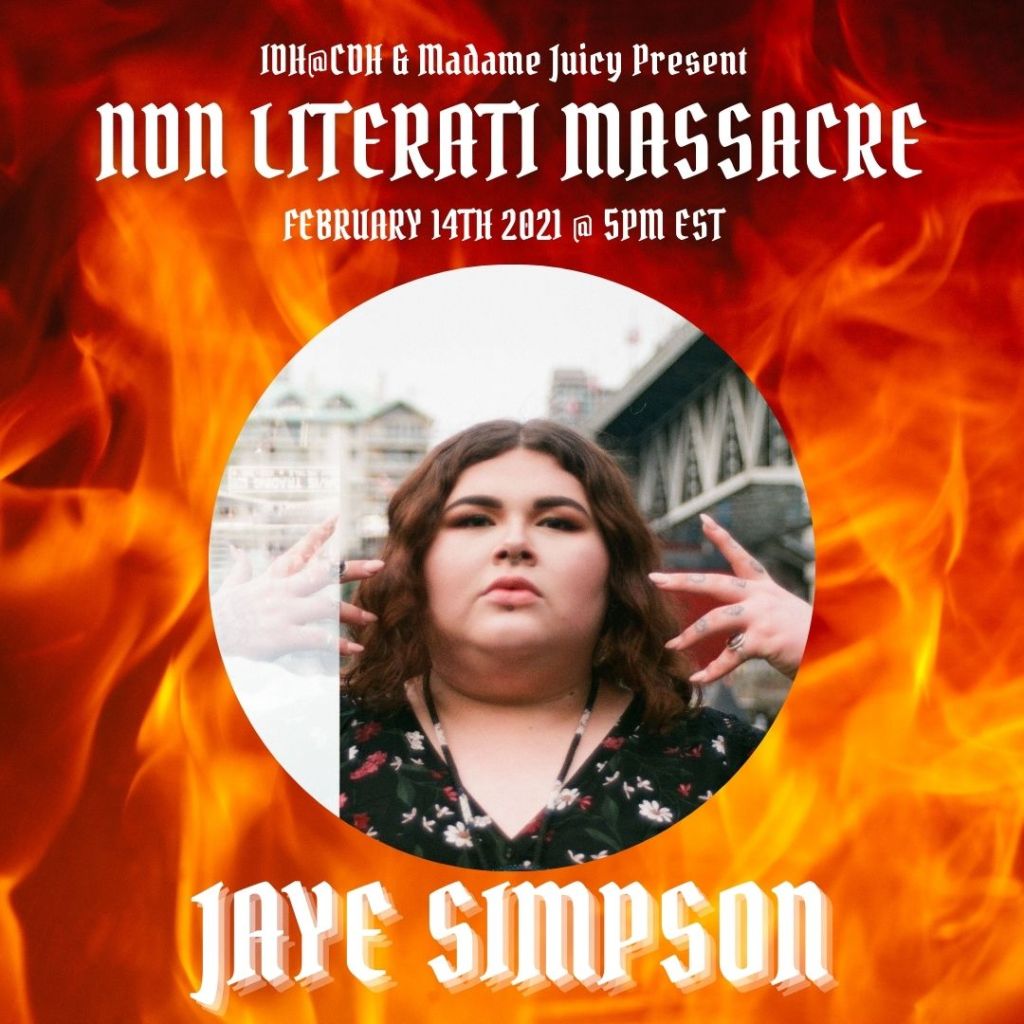
    During the COVID-19 pandemic, award winning poet and artist Arielle Twist started to stream on Twitch as @MadameJuicyTTV. Responding to the isolation trans Indigenous women experienced during the pandemic, and the lack of representation of trans Indigenous women in the Twitch community, Twist’s channel created a space for connection around the horror games she played on her channel.

    On Valentine’s Day 2021, Digital Kinship Lab co-hosted a Twitch stream with @MadameJuicyTTV featuring Indigenous writers. The NDN Literati Massacre was a way to witness the joy that NDN gamers are finding together in virtual worlds like Twitch. During a stream of the horror game Dead By Daylight, Miss Juicy also interviewed the Indigenous literary figures she hosted about horror (who played as “survivors”), while she played as “the killer.”

    Taglines promoting the stream on social media included: “We’ve survived CanLit, can we survive this?” and “Will they be the last them?”

  • Digital Kinship: What is IDH?

    Digital Kinship: What is IDH?

    Hello from the field, literally and figuratively. I am writing from my territories where I’ve been hunkered down with a manuscript (and healing) for the last month. And, if you can’t tell by the delicate #aesthetic pumpkins in one of the following photos, which confirm my assent into the auntie circle, I’ve been feeling festive this fall. This post already feels like an homage to LiveJournal, non? Remember LiveJournal? Remember DeadJournal? I think I still have one of both out there (but I’ll leave that for the internet historians).

    Digital Kinship Lab has been hard at work connecting the early networks that will comprise its System, Hubs, and Constellations. We are particularly excited to finally announce our first set of collaborators that will define our first Hub. But before I move on, it occurs to me that you, dear reader, might be wondering what all these words mean in this context: Hub? Constellation? IDH?! Let me elaborate.

    Digital Kinship Lab is situated in the Faculty of Arts at Toronto Metropolitan University. The Lab began with the purpose of defining an Indigenous intervention on the field of Digital Humanities. IDH is a creative anti-field for all the Others. IDH operates through an understanding that Indigenous digital visual cultures, new media, and Indigenous technologies have under-represented the perspectives of queer and trans folks, #MeToo era feminists, and other knowledge producers who don’t fit the perfect image of the resurgent and “traditional” Indigenous person performed for a non-Indigenous spectatorship. IDH is for NDNs who know that representation of Indigenous peoples in the future isn’t enough. IDH is for NDNs who only ever seem to be represented in the future, as if we don’t exist in the present. IDH is for NDNs who aren’t gamers and noise artists, but still want to collaborate beyond physical and virtual boundaries in digital media and tech.

    The tendency in DH scholarship when approaching Indigenous perspectives is to retroactively place Indigenous new media and digital art practices from the 1990s into contemporary understandings of DH histories, and/or call for increased representations of Indigenous peoples in the disseminations of the field. The problem with the former is that early new media and digital makers, creators, and historians—and later generations of Indigenous peoples who carried forward the legacy of their methodological frameworks—defined their movements by their refusal of the colonial temporality infused into early digital spaces, technologies, and histories. Further, Indigenous new media communities were forged alongside international visual art institutions and, therefore, aligned with art industries in the development and dissemination of their work (as opposed to a community of DH practitioners based in technology-related fields). Amending histories in DH to retroactively include Indigenous new media practitioners and digital artists, and/or positioning Indigenous digital creators and makers not as producers of moments in DH history but as objects of study within already established discourses of DH, is settler temporal, not Indigenous temporal, DH scholarship.

    Historically, DH discourse has been deeply rooted in exclusionary tech-speak and protocols, and has facilitated the emergence of a field-wide postmodern abstraction naturalized within the discourses of DH that can make practitioners, at times, cagily inattentive to the material dimensions of the field. In the image of capitalist and colonizing tech industries—driven by systems of extraction that perpetuate domination over the land, and a production over people model that exploits human labour—feminist DH scholars have argued that the men-dominated fields of technology and research about technology have been coded with masculinist computational methods.

    IDH addresses the colonial underpinnings of DH scholarship and DH technologies as ultimately STEMing from a multi-pronged system of coloniality that operates through modes of patriarchy and masculinism, that evolved alongside Western expansion and Enlightenment, and afforded Man, alone, the divine right of God to produce knowledge and its co-related human centricity. Yes, as you’ve probably guessed by now, this Lab is a posthumanist Lab and it considers the technologies we work with to be animate and potential kin.

    IDH can also provide a limitless utopia for an emerging, multi-generational movement of Indigenous creators and makers working in digital visual cultures and with technologies, who feel pushed out of the ever-precarious fields that compose fine art and often put profit over people. These movements are pointing to the multiple knowledges, methods, and materials that they require to weave together a sense of self and people, when they were forced out of community and ceremony. IDH can encompass the fluid and multimedia methods that our collaborators work within: networks of writers, artists, makers, content creators, and more! IDH can provide a place for the Others, all we who have been without a disciplinary home because our bodies are too much.

    Digital Kinship Lab collaborate with Indigenous media artists, filmmakers, and content creators to produce digital media, support creative kinship, and share 2LGBTIA+ Indigenous Stories. Unlike other Indigenous culture and policy research labs, Digital Kinship Lab will not serve the interests of extractive industries that exploit Indigenous makers, creators, and (world)builders. Digital Kinship Lab de-centralizes modes of power in the technologies we infuse our ontologies with. Digital Kinship could be appendages, pleasure machines, feminist AI and a whole world of sapphic ecologies and possible technologies. This is a Lab for the future, including the future of tech. Importantly, this Lab follows in the footsteps of our big siblings and kin, queer and trans DH, to meet Indigenous digital humanists in the technologies they are working in.

    What can we say? Lesbians get things done. Queer ecologies have informed queer networks and technologies. Consider, won’t you, the numerous hookup apps that have been built for gay men that emulate the cruising subcultures that have been developing in back alleys, mall bathrooms, and parks for decades. But, imo, there has never been a successful and safe version of these hookup apps for lesbians, queers, and trans folks. One short lived dream of developing such a digital space was OurChart.com, made in the image of THE CHART: a fictional lesbian network contained in the mind of The L Word‘s token bisexual character Alex Piezecki.

    In retrospect, The L Word approached Latinx, Black, bisexual, and trans storylines in appalling violent manners and likely informed my own normalization of intimate violence within lesbian communities. But, for a few blissfully ignorant years around 2005, which is coincidentally when I was “coming out” (and before I knew how bogus that concept was to me personally or that I am not, in fact, a lesbian), The L Word was a cultural reset.

    THE CHART was a nebulous of romantic relationships between bisexual women, queers, and lesbians that started as a drawing on a blackboard in Alice’s office, who depicted a wild web of arrows and names all circulating around figures, such as resident player and toxic masc Shane. An emulation of a galaxy or a spider’s web of intimate connection, THE CHART represented a lesbian ecology that matched those I recognized from my own communities at the time. THE CHART represented temporaries of sapphic refusal, built outside of a cis-centric and masculist ordering of the world that felt so constraining to me as a youth living in Regina, SK. Damian Bellino and Anne Rodeman called THE CHART a visual and digital representation of “the complex relationships within a chosen queer family.” Life would come to imitate art when the series’ creator Ilene Chaiken launched OurChart.com: an advertiser supported social networking site for lesbians and their networks.

    The IDH CHART uses the language of THE CHART—System, Hub, and Constellation—to acknowledge a legacy of queer ecologies that have influenced the ethics and practices of DH practitioners who will work with IDH. The IDH CHART is made in the image of queer ecologies like THE CHART, which have been and continue to be important to Indigenous peoples who have not yet seen themselves extensively represented in Indigenous visual cultures, literatures about the present, and film and television. At its ideal, THE CHART shows how networks should not be performed for institutions and spectatorships; they should be intimate and defined through shared and specific temporalities. If we can take anything from the pitfalls of an identity-based movement like lesbian communities, that flattened difference in the early 2000s and thereby reinforced modes of power, THE CHART shows that intimate networks should never be monetized and aligned with the never ceasing tick of capitalism.

    THE CHART is not the only instance of intimately made objects that represent queer ecologies of refusal. During the 1990s riot grrrl zine movement, young women defined the temporality of their movements by handwriting zines, photo copying them, and handing them out at punk shows. There has been an enduring legacy to zine culture and queer zine fairs are still held yearly in metropolises across Canada and the US. In fact, I started my own writing practice and creative networks when tabling queer fairs with my now defunct zine distro Critical Sass Press.

    The early video monologues of Theo Cuthand, Digital Kinship Lab collaborator, feel similar to a perzine—a zine about the personal experiences of its author—dealing with the isolation of living in Saskatoon as an NDN lesbian in the late 1990s. There was something empowering about the DIY/zine culture that was percolating throughout lesbian feminist spaces in the 1990s, at least partially influenced by a legacy of third-wave and riot grrrl feminism. This affect is reinforced at the end of Cuthand’s short film Lessons in Baby Dyke Theory when Hole plays over credits that are scribbled on loose-leaf paper and then taken away one at a time by hand. The credits end with Cuthand closing his hot pink binder with a sticker on the outside the reads “dyke visibility.”

    Cuthand was isolated in his room, using new media as a means of sending his post-reality monologues into the world, hoping and praying for connection. These are the forms of intimacies and legacies that IDH and Digital Kinship Lab references with our early handwritten webs representing our ever evolving networks and collaborations, which represents an intimate network of collaborative kin. In the image of the feminist and queer ecologies that influenced Digital Kinship Lab networks, the IDH CHART will grow organically, through forms of kinship, over time, and represent real, sustainable relationships between friends, collaborators, and creative networks of IDH makers and creators.

    Digital Kinship Lab is in the process of building our first constellations of collaborators around our first Hub: Digital Imaging. Last week, Digital Kinship Lab was lucky to be asked to pitch a web series that our newly formed production collective has been developing at ImagineNative Industry Days. ImagineNative is the largest international Indigenous film festival and digital media space, and is hub of activity each October for Indigenous creative communities internationally.

    While representation alone should not be a final goal of NDN temporalities, media can provide an initial imaginary for NDN futures, one grounded in processes of communal- and self-transformation, defined through accessible modes of expression, and devised through collaborative methods. Representation in digital visual cultures will be the foundations of the Lab’s early research disseminations wherein we will collaborate with with filmmakers, artists, and curators to produce digital visual cultures that represent diverse and contemporary Two-Spirit and Indigenous queer and trans peoples through four media initiatives.

  • Sewing Circle: KIN Web Series

    Sewing Circle: KIN Web Series

    Sewing Circle Productions is a production company owned by Jas M. Morgan. Sewing Circle produces films and series centring the stories of Indigenous 2LGBTIA+ characters.  

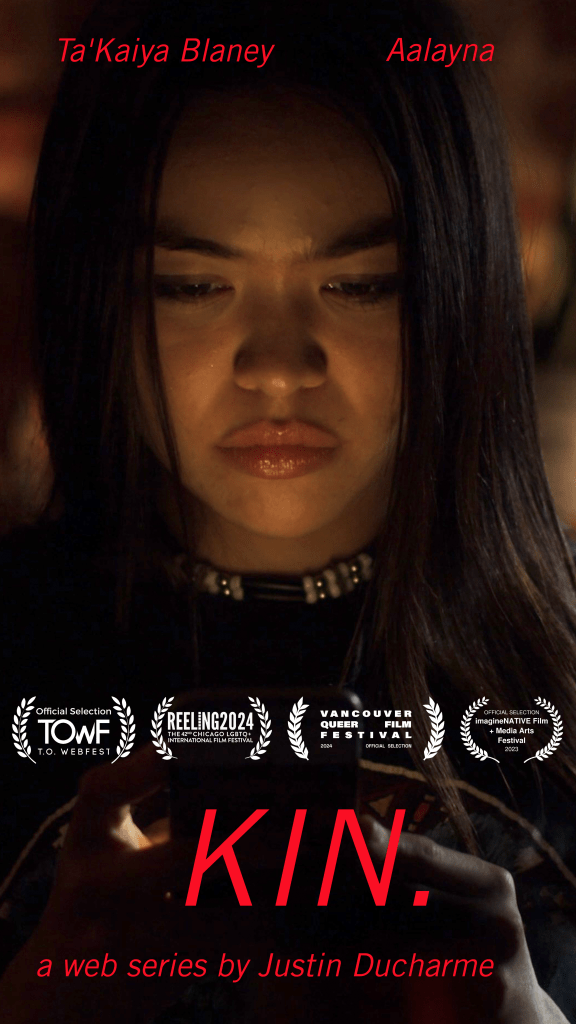
    Sewing Circle is excited to announce its first project, our web series KIN. KIN is an honest and comedic exploration of the urban queer and trans Indigenous experience centred around a group of friends and their social media obsessed lives.

    KIN was generously funded by Bell Media, ImagineNative, and the Social Sciences and Humanities Research Council. The web series won the APTN and ImagineNative web series pitch contest at the 2021 edition of ImagineNative.

    Starring Ta’Kaiya Blaney (Monkey Beach, Kayak to Klemtu) and Aalayna in her first film role, KIN is directed by Justin Ducharme (Positions, The Dancer) and written by Ducharme and Arielle Twist (Disintegrate/Dissociate). The web series premiered at the ImagineNative Film Festival in October 2023.

    KIN is an official selection of T.O. Webfest, and was nominated in the Suzette Laqua Best of BC Series category. KIN is also an official selection of the Vancouver Queer Film Festival and the Chicago LGBTQ+ International Film Festival.

    KIN has been featured in Glossi Mag, Now Toronto, Etalk, and Club Friday.

    Email Sewing Circle at sewingcircle [at] jasmorgan.com.

    Follow KIN on Instagram to stay up to date with distribution announcements.

    Instagram: @kin.series

  • Digital Kinship: IndigiTikTok Platform Charter

    Digital Kinship: IndigiTikTok Platform Charter

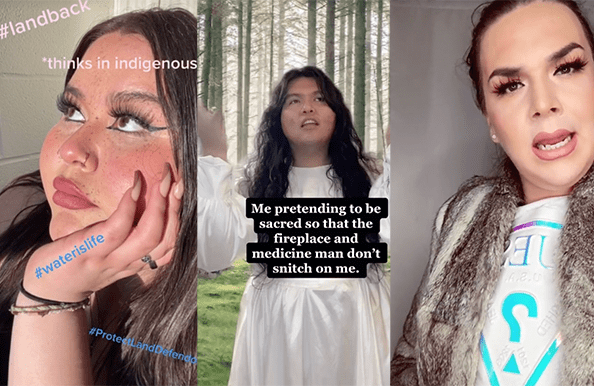
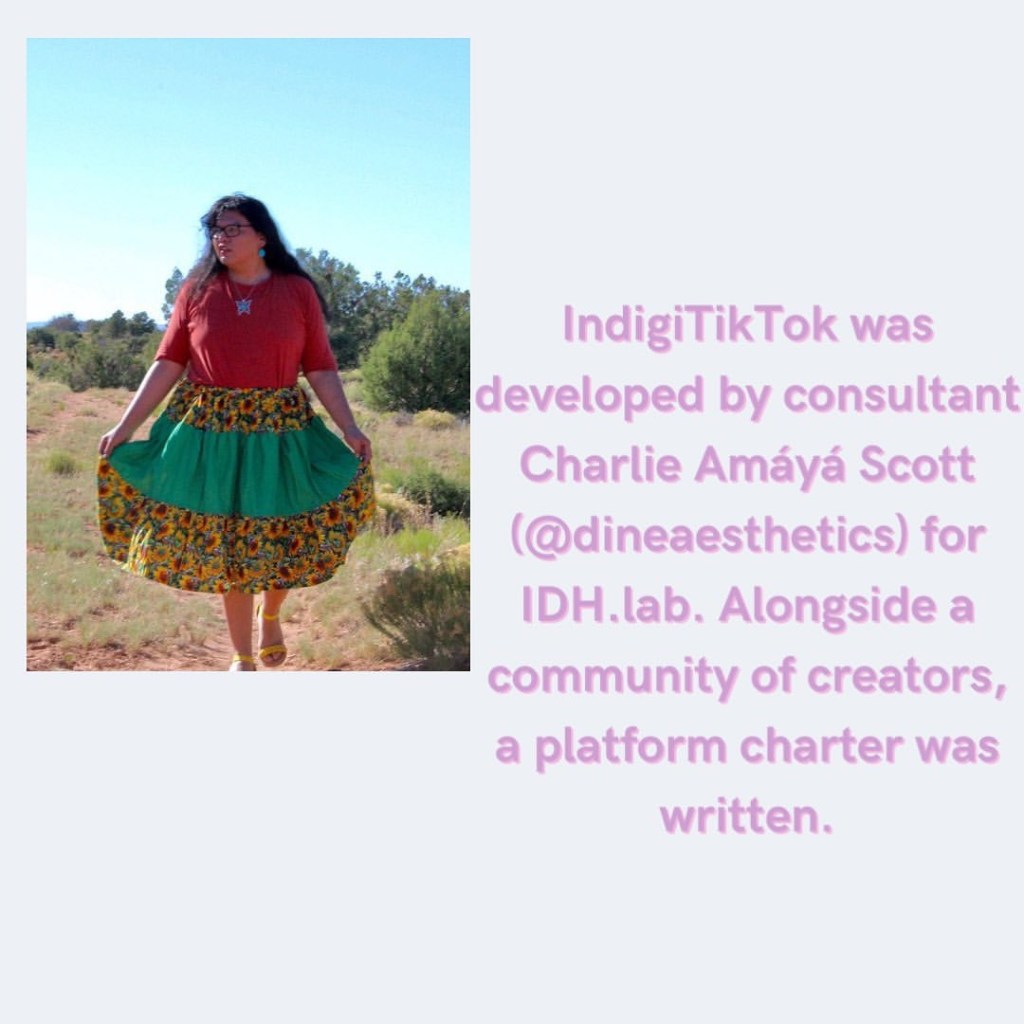
    In the summer and fall of 2020, Charlie Amáyá Scott worked with Digital Kinship Lab and the Centre for Digital Humanities at Toronto Metropolitan University to develop @IndigiTikTok: a TikTok account developed by Indigenous content creators. IndigiTikTok launched on Indigenous Peoples Day, October 12, 2020, with a takeover by founder and creator Charlie Amáyá Scott.

    Charlie Amáyá Scott is a Diné (Navajo) scholar born and raised within the central part of the Navajo Nation. Charlie reflects, analyzes, and critiques what it means to be Queer, Trans, and Diné in the 21st century on their personal blog, dineaesthetics.com and other social media sites such as InstagramTwitter, and TikTok. Their English pronouns are they/them and she/her.

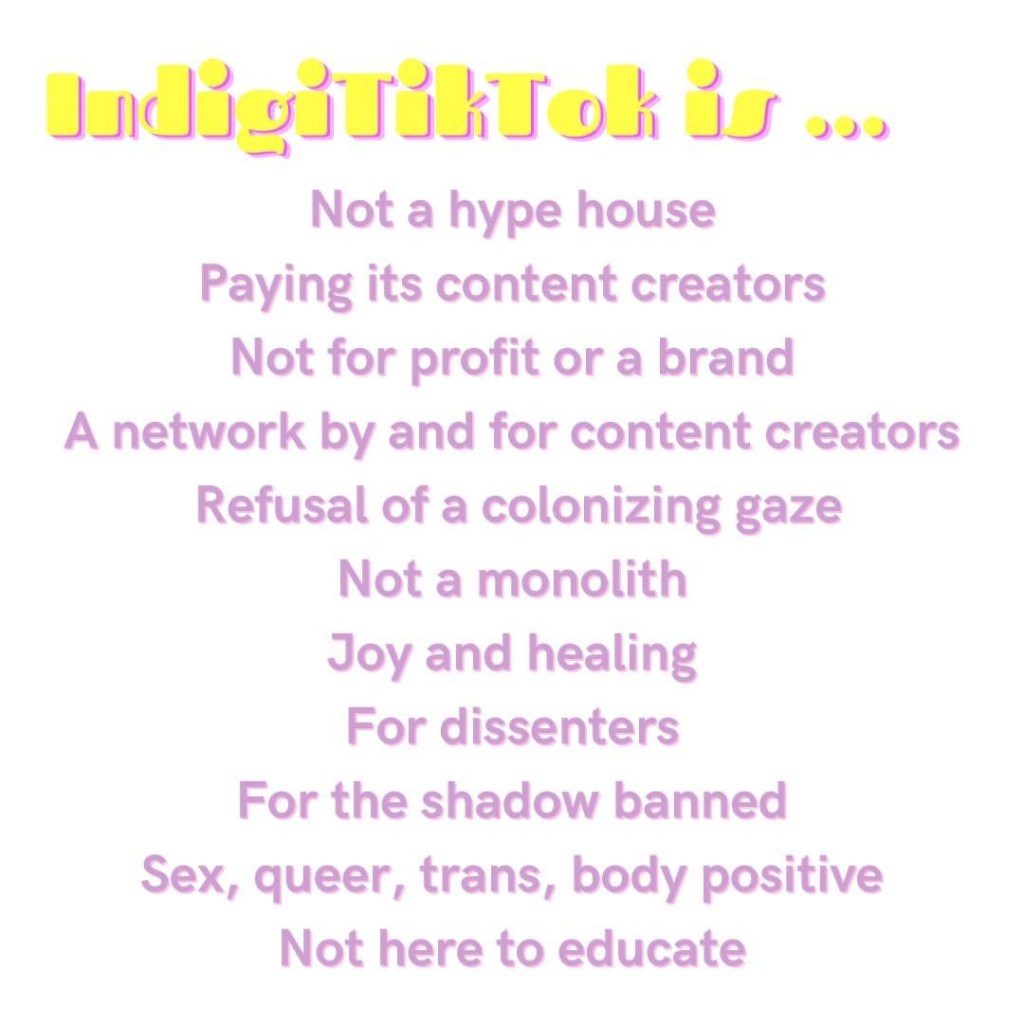
    Enlisting the consultation of a community of Indigenous content creators—Charitie Ropati, Lane Yazzie, Cante Zephier, and Pauly Denetclaw—Scott devised the following platform charter for @IndigiTikTok.

    Document’s Purpose: To develop a standard of ethics that ensures content creators are not affirming anti-Black racism, transphobia, homophobia, misogyny, classism, xenophobia, etc. In addition, outline the intentions, goals, and future of this multi-platform digital channel. 

    Mission: Provide a digital platform that highlights Indigenous representation rooted in authenticity, humor, healing, and joy.

    Below is an outline of the goals of this platform. 

    1. This digital platform is committed to expressing the immense complexity of what it means to be Native American, First Nations, Native Hawaiian, and/or Indigenous Peoples in the 21st century. 
    2. Content created for this platform is meant to celebrate the life of this complexity and is not intended to be educational.
    3. Integrated throughout the content and this platform are intentions of refusals against colonialism and understandings of what “traditional” means for Native Americans, First Nations, Native Hawaiian, and/or Indigenous Peoples. 
    4. Overall, this digital platform will challenge the colonizing narratives written out for many Native Americans, First Nations, Native Hawaiian, and/or Indigenous Peoples and be a medium to reclaim our voices. 

    Outlined are the ethics that will guide the expectations of this platform. 

    • This is a platform by Native Americans, First Nations, Native Hawaiian, and/or Indigenous Peoples, for Native Americans, First Nations, Native Hawaiian, and/or Indigenous Peoples.
    • This is not a platform for the monolith.
    • This is not a platform for us solely to answer your questions about dream catchers or beaded earrings.
    • This is for all the youths who wanted to be a part of edgy queer Tumblr, but didn’t have internet access on their Rez.
    • This is a platform to show future generations who we really were, and who we have the potential to be.
    • This is a platform to share what we, Native Americans, First Nations, Native Hawaiian, and/or Indigenous Peoples, look like when we experience joy.
    • This is one place where we, Native Americans, First Nations, Native Hawaiian, and/or Indigenous Peoples, can make work for ourselves, and to heal ourselves.
    • This platform is for the instigators, the troublemakers, and the tricksters.
    • This platform challenges and advances notions of tradition. This is a platform for Native Americans, First Nations, Native Hawaiian, and/or Indigenous Peoples who are made to feel non-traditional. 
    • This is a platform of people like us.
    • This platform is sexy! This is a platform for sex and body positivity. Let us experience happiness and euphoria.
    • This platform doesn’t care about the comments or trolls. 
    • This is a platform for the shadow-banned.
    • This platform is not for the blue checkmark Native Americans, First Nations, Native Hawaiian, and/or Indigenous Peoples.
    • This platform is not for Native Americans, First Nations, Native Hawaiian, and/or Indigenous Peoples who fit into normative colonizing beauty conventions.
    • This is not a platform for fatphobes, or homophobic and transphobic cisgender and straight people.
    • This is not a platform for AAVE, the “savage” discourse, or other forms of anti-Blackness within Native Americans, First Nations, Native Hawaiian, and/or Indigenous communities. 
    • This is not a platform that entertains misogyny, classism, xenophobia, and/or other forms of colonizing violence. 
    • Yet, also this platform encourages shutting off your phone, taking distance from social media when needed, and knowing, in the love of your community, that everything will be okay.

    Thinking ahead

    • This is a platform meant for supporting, healing, and mitigating literal and lateral violence against Native Americans, First Nations, Native Hawaiian, and/or Indigenous Peoples on TikTok and other social media networks. 
    • This platform desires to cultivate a digital community across the globe that encourages Native Americans, First Nations, Native Hawaiian, and/or Indigenous Peoples to be able to express who they are without appealing to a colonizing gaze through humor and joy. 
    • This platform is for generations now, and the generations to come.
  • On the (Trans) Misogyny of NDN Cancel Culture

    On the (Trans) Misogyny of NDN Cancel Culture

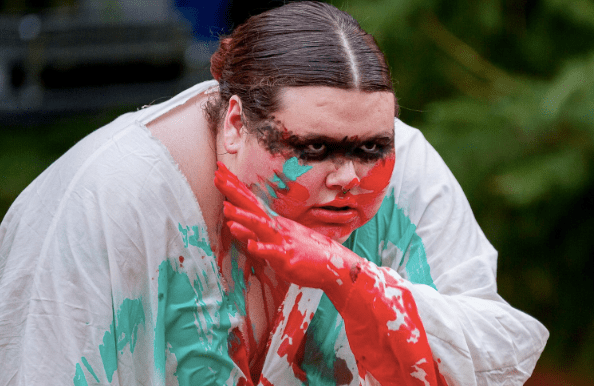
    Featured image: “queering the waterways,” jaye simpson, performance, 2019.

    For the purpose of this post, I’m going to pull from my own experiences. I do this because I don’t own anyone’s experiences but my own. That said, I was undoubtedly inspired by several points of conflict that have occurred between Indigenous peoples on Twitter over the past several week and months, where many have expressed that lateral violence between Indigenous community members has reached a perceived peak. I am inspired by transfeminine folks that I call kin, who face transmisogynist violence online daily, and who feel isolated from and ill-supported by Indigenous community. They shouldn’t have to hold the weight of these conversations.

    Given that people are now isolated because of COVID-19, struggling with the mental and physical affects of that isolation, and increasingly turning to social media platforms as one of the only places to reach out for connection to other people, the ability for folks to respond to complex forms of institutional violence has naturally increased following Black Lives Matter protests internationally that exposed anti-Black racism in America and Canada. But I’m also cautious to describe COVID-19 era conflict on Twitter, as exceptionally toxic—as it is often described—because online conflict between so-called minority groups are part of a cycle I have known for years.

    I want to open with an example to provide a point of analysis. Recently, a well-known Indigenous figure with many followers posted a tweet that perpetuated a divide between the digital, namely Twitter, and “real” Indigenous community. Certainly, the figure meant to say that sometimes we should log off and reconnect with what we, as Indigenous peoples, constitute our real communities to be because social media can be loaded with abstracted conflict that takes us away from said communities. While a harmless assertion, the tweet immediately became a classic “pile on” from many segments of Indigenous community. The figure had unwittingly stumbled into a space of much debate about the loaded politics that get brought into conversations about the false Rez/digital binary. Indigenous folks from diverse backgrounds, geographies, and nations brought to the heated conversation their own baggage. Misunderstanding ensued. Subtweets followed. Rinse. Repeat. In aeternum.

    One of the conflicts that came from the aforementioned Twitter thread resulted from the continued misgendering of a trans Indigenous youth by an internationally famous Indigenous creative based in Canada. In the thread, the creative posited: 1) trans people aren’t “real;” and 2) that the trans person in question was trying to “trick” him in order to get him “canceled.” When I confronted him about enacting one of the oldest rhetorics in the transphobia playbook, the creative then took to direct message to misgender me now, tell me, once more, trans people aren’t real, and use trans slurs and a series of profanities. Women and other queer and trans individuals would flood my inbox that day with their own stories about how he had verbally abused and harassed them, for years. Sometimes this harassment occurred on stages in front of entire audiences at festivals and industry events.

    It’s important to understand that this is not an exceptional occurrence. In fact, I’m reminded about an instance at the beginning of my career, wherein I had gotten into what I thought was a minor Facebook conflict with an infamous Native “troll.” He and his friend, also an Indigenous man and creative administrator, verbally berated me, posted a series of hurtful statuses on Facebook about me after blocking me so I couldn’t stand up for myself (that were liked and interacted with by many of our colleagues), and attempted to get me, an Indigenous transgender youth (at the time), fired from my job. Years later, I would be asked to be a part of an accountability hearing at his institution. I declined because I don’t think it’s ethical to get anyone fired, nor is a capitalist industry where I enact my activism. I do my work to transform my community of Indigenous peoples. Then again, his nationalist rhetoric made him all “real” Native man. So, whose to say what’s The Truth, you know?

    I think the rhetorics of “conflict” are interesting in the context of the aforementioned examples. I remember that, at the time the latter instance occurred, many of my colleagues told me that this was not abuse or (transphobic) violence. “That’s just two Native folks who don’t get along,” they would say. Conflict, in essence. Certainly, I have come to learn that I can’t equate disagreements with abuse because mutual survivance is central to my responsibilities as a Cree-Métis-Saulteaux person. Still, their rhetorics sounded so familiar to me.

    My Métis mother once told me the story of when my Anishinabe father punched her until she thought she was going to die. She had to stab him in the chest to get away. My mom, a Halfbreed from Prince Albert, was vilified and degraded by my Anishinabe family for years, who still try to get me to denounce her when i see them, even after my father did time for sexual abuse of minors. When I asked my grandmother and auntie about the abuse, they replied, “Abuse?! No, my girl, your mother is just [a] crazy [Halfbreed].”

    Though the aforementioned Twitter thread, that created so much controversy around the false digital/Indigenous divide, all took place publicly, on a social media platform wherein many members of Indigenous creative communities observed the harassment, the herein unnamed creative will go on to work with key figures and institutions in Indigenous creative industries nationally and internationally. When his next work comes out, it will have the best slot at all the big festivals. No one, in any serious measure or way, will ever let his public display of transphobia and misogyny effect his career or livelihood. Truly, this is the last breath I want to give to men and misogyny. Everything I have written is a set up, a comparison, to what Indigenous women, queer, and trans folks experience online, and the uneven repercussions of “calling out” and being “called out” online.

    Certainly, I know the categories I have laid out herein are precarious and escape colonial definition, as well. Cisgender Indigenous women would even come forward to posit that those “not real,” and also conveniently transgender, Natives who wanted to talk about the problematics of the false digital/real Native divide were actually perpetuating stereotypes about Reservations peoples (though I and those who contested the rhetorics at play were, indeed, “Reservation Natives”). Why are Natives so afraid of nuance and critique that would generate trans-positive resurgence and anti-maculinist forms of nationalism, that aren’t just rhetorical re-articulations of coloniality (I will elaborate herein). Why is it still controversial to say that rape, domestic partner abuse, homophobia, and transphobia all persist on Reservations. Because they do?

    There is something else at play here. Is it trans identities that cisgender Indigenous peoples constitute as “not real,” as the aforementioned Indigenous creative suggested? Because, certainly, we can uphold Reservation peoples and our nations without falling into transphobic and misogynist colonial logics. Further, such a rhetoric is wilful ignorance regarding the fact that the gender binary is a colonial construct, and so-called gender diverse communities have long existed in Indigenous communities. Tl;dr – (trans) misogyny is a tenant of coloniality, and not inherently of Indigenous worldviews. Like, have you even read Emily Riddle or watched a Thirza Cuthand film?

    Also notable is that the original poster of the tweet that created so much controversy remains unscathed as the instigator. In comparison, during the same week, several Indigenous women were called out on Twitter and chased off the platform for much less direct forms of participation in actions that resulted in them being “called out” by other Indigenous women, queer folks, and trans folks. An “Indigenous feminist” posted a transmisogynist article on Medium (that I won’t even link because it’s so violent), and Indigenous community, including non-binary and cisgender folks, sat idly by while trans women were forced to respond.

    Why are Indigenous men impervious to critique online? They can publicly enact misogyny, harassment, sexual violence, and transphobia without negative consequence. Yet, it’s women, queer, and trans folks, and predominantly trans women, who are subjected to constant lateral violence and cruelty online and within creative industries.

    An Abridged History of Misogyny in Popular Film

    This review of misogyny in film industries is not robust. There are many places one could begin a discussion of how misogyny has incepted American and Canadian film, and such an analysis could span back as early as the medium’s very inception and men-dominated lens. But I want to focus in on a single point of analysis: men director’s treatment of women on their sets.

    For generations, women were only present on sets as actresses and endured unspeakable violences because of their entanglements in the film industry [1][2][3][4][5][6][7][8][9]. Countless actors including Alyssa Milano, Gabrielle Union, Lady Gaga, Terry Crews, Viola Davis, Jane Fonda, and Rose McGowan have come forwards to talk about their experiences of sexual assault in creative industries. And the recent conviction of Harvey Weinstein has opened up a window into Hollywood, and exposed that women’s participation in film industries is widely associated with sexual abuse—women’s safety on set is the exception.

    While murder and rape is an extreme form of misogyny that has affected women in film industries, there is also the often ignored issue of masculinist cultures in the film industry and how that influences the overall culture on film sets. TikTok creator @kelitarosita recently produced a series of videos discussing Shelley Duvall‘s experience working on the set of the Stanley Kubrick’s film adaptation of The Shining (1980). Stanley Kubrick is widely renown for having excessive methods on set that would torture the women actors who worked for him. Kubrick told the rest of the cast and crew to never speak to her, to ignore her, and especially not to compliment her for her work on set, meaning that the entire set participated in creating this misogynist culture around Duvall (for thirteen straight months, while working 12 hour days isolated on set). Kubrick would cut her lines without notice, and set up traumatizing scenes without giving her any warning so she would react with genuine, sheer terror. Kubrick would shoot repetitive scenes with Duvall, to the point of emotional breaking and physical harm on her person. This mistreatment of Duvall would negatively impact her mental health for the rest of her life. On set, Duvall became physically ill and began losing clumps of hair. In 2016, Duvall made an appearance on Dr. Phil, clearly in a state of mental deterioration. All this was done, said Kubrick, to evoke authentic emotion from his actor. On the other hand, Kubrick was good friends with Jack Nicholson, and Nicholson would go on to have a decorated and successful career for decades. Nicholson would also speak favourably of Kubrick in the media for years to come, despite what he had witnessed.

    Kubrick is not exceptional in his misogynistic torture of creative communities. Well known directors who are still widely taught in film schools, such a Alfred Hitchcock and William Friedkin, are renowned for abusing their women actors on set. And these are just the cases we know about. Within film studies and the film industry, an ethos of putting the art before the artist still permeates. Notably, on a recent episode of the podcast Reply All about the film The Exorcist, when the unethical treatment of child actor Linda Blair was brought up, guest host and actor Jason Mantzoukas replied, “that’s just how things were back then,” and moved on with the conversation.

    While the abuse of actresses is an overt form of misogynistic violence that is normalized within the film industry, it provides a basis for analysis of the normalization of misogynist cultures within creative industries; namely, how entire industries of people are responsible for upholding misogynist forms of harassment. Further, entire communities of industry actors participate in maintaining silence around the misogynist actions of men, thereby perpetuating a culture of misogyny.

    By sharing this history with you, I hope to show that cultures of misogyny are not “traditional” and have no place in Indigenous art and film. (Trans) misogyny is colonial violence, and our understanding of “traditional” nationalism has been deeply influenced by a colonized worldview regarding gender, sexuality, and the differential treatment of all those who are not men. Queer and trans creators want to see beyond that binary, to what comes after a coloniality of being, to get all Sylvia Wynter about it. As my colleague Anne Spice has said, what comes after we imagine otherwise?

    Though the technologies have changed, now we are all soft content creators, the ways we infest misogyny into the very methods of the work we make, and into the legacies of the objects we birth, whether a film or a tweet, still apply.

    Lateral Violence, Social Media, and Cancel Culture

    I hesitated to use the term lateral violence in this text. I know now that the term “violence” is subjective and complex. Yet, throughout the trajectory of the conflicts I am about to share with you, the term “lateral violence” remained at the forefront of many Tweets and minds as the only idea weighty enough to encompass the kinds of hurt that can occur between Black and Indigenous women, queer, and trans folks.

    For Black and Indigenous women, queer, and trans folks who have been marginalized within creative industries, there are many tactics for survival. One tactic is to take to social media platforms such as Twitter to express their concerns. Here’s where expressions of power become important. Black and Indigenous peoples with little, no, or precarious institutional supports take to social media because, quite literally, it is the only place they can seek mutual aid among one another; it is the only place for them to take back power in a small way. Twitter is a void wherein Black and Indigenous peoples can express hurt they have endured in a colonial-capitalist society. Don’t get me wrong, many a queer digital theorist, likely reflecting on Tumblr era movements, has written about how void-shouting only re-traumatizes oneself and others. Still, Indigenous trans youth have been able to find digital communities that can understand and mirror their experiences. Twitter is therapy. Twitter is self-actualization.

    Twitter’s influence on creative industries has been precedent setting. Twitter is increasingly becoming a technology that is relied upon for maintaining an audience as a creative professional. The intersection of creative industries and textual interaction on the platform has made space for dialogs and interactions between people who might not have previously crossed paths because of socioeconomic stratification. Privileged social conservatives such as Jon Kay, Hal Niedzviecki, and JK Rowling have all recently gotten caught up in Twitter discourse that exposed their various politics based in white supremacy, misogyny, and transphobia, and marked them, and their rhetorics, as dying. But racists and transmisogynists losing their jobs and narrating their decent into obsolescence is not what I want to discuss herein because I am not interested in looking back at what has already happened. So don’t even ask me to comment on “the letter.” Social conservatives do a good enough job of ending their own careers; they don’t need any extra publicity from me.

    But, to be sure, these aforementioned “cancellations” were not the result of the Indigenous, Black, and trans folks who did the calling out. What did cause said cancellations was the capitalist actors at the helm of the institutions those who were “cancelled” worked for (also white people), who saw these parties as being disposable (a measure that actively resists exposing and working on racist cultures throughout organizational structures). They became scapegoats of a predominantly white industry that wanted to paint institutional racism as “a few bad eggs,” however misplaced their cruelty became. Those who were doing the “calling out” online were never met with a respectful dialog by the childish industry actors, some 20-40 years their senior, who instead doubled down on their racism and transphobia. Unable to speak out against the institutions they felt scorned by, these actors projected that hatred and anger on Black and Indigenous communities, and portrayed themselves as good rational creatives and victims (read: white- and colonial-coded), whose only pursuit is The Truth; and positioned those who called them out as demons (no jokes, they went right back to the 1400s for their racist rhetoric), irate, irrational, and violent actors (read: the same thing white people have been calling Black and Indigenous peoples for centuries to legitimate scientific racism). So, on one side we have folks with institutional alignments worried about profit; and on the other there are impoverished and socially stratified communities who are asking, simply, to be able to survive and thrive.

    What I do want to focus on is the relationship between what has been called call out culture, misogyny, and Indigenous communities online. Not all online “call outs” are cut and dry cases of confronting racists and transphobes. While Indigenous youth are turning to social media to speak out and attempt to rebalance inequitable communities and industries, Twitter has become an infamous “burning dumpster fire.” Certainly, online voids are not moderated for their ethics. But, as previously stated, Twitter has become an industry hotspot where creatives increasingly need an audience in order to support their careers. Additionally, many millennials grew up in an era of monetized identity politics, and it’s no secret that a few careers have been launched by the spectacle surrounding online forms of call outs. But the space where Indigenous peoples project their egos and identities into virtual worlds for monetary compensation is exactly where lateral violence and spectacle surfaces.

    As aforementioned, a search for “respectful dialog” can be loaded and neoliberal. But Indigenous peoples know we can encode digital objects and virtual proper beings[1] with Indigenous and queer ethics. Indigenous peoples have argued that the internet is a continuation of their own worldviews, and just another space and temporarily they see and interact with through their own teachings and outside of a colonial order. As my friend Alicia Elliott, who I have learned a lot from about these kinds of interventions, once said to me, “we don’t have to play [their] game.”

    Yes, “cancel culture” is here. Yes, cancel culture is here to stay. It hasn’t always been called cancel culture, and it will mutate with time. We will debate its semantics for years. There will be many evolutions of its title. But, just as our movements continue to digitize, so too will our modes of enacting lateral violence. Cancel culture has always been here, and it comes in waves. 

    In 2014 I penned a “call out” entitled Know Your History. This is just what we called it at the time, though the discourse around that term has become loaded. Notably, I am taking responsibility publicly for writing this call out for the first time. I say this with a complete lack of ego. I doubt the specific moment this post encapsulates means much to anyone outside of a handful of people, nor do I harbour any belief that this post achieved anything meaningful in the long-run of MMIW community politics, which are still rife with conflict and lateral violence. In fact, I feel a little shame to own up to writing this post. No doubt, my techniques were brash and I was young when I wrote Know Your History. When I posted the call out, I was in my early twenties and I could count the Two-Spirit people working in community activism nationally on one hand (we hadn’t enveloped “queer” and “trans” embodiments into the discourse because, for me, that moment in Indigenous community was characterized by a discourse centred on resurgence as tied solely to roles and responsibilities regarding “The Land” and being in lodge). And folks were retiring in their mid-twenties because of stress-induced illness resulting from online lateral violence. Folks in my community were being threatened with the then new phenomenon of “doxxing,” and their Twitter lives were starting to affect their real lives in harmful ways. What’s notable about the conflict leading up to the call out is that it occurred solely between Black and Indigenous women, queer, and trans folks.

    When I wrote Know Your History, it was the first time I noticed that: 1) Indigenous women, queer, and trans folks are called out publicly at a higher rate than Indigenous men; 2) Indigenous women, queer, and trans folks are called out publicly at a higher rate than Indigenous men by each other; and 3) when they are called out, they have a higher rate of losing their careers, not because of firing or cancellation, but because of their own ethics and fear of a culture of bullying in creative industries among women, queer, and trans folks.

    I have never signed an open letter or call out that was connected to industry actors because my own ethics are that healing cannot simply consist of self-appointed judges, juries, and executioners composed of unseen minor celebrities, against one lone, solitary figure. I’ve never signed my name to an open letter, including this one until today, because I don’t personally want to monetarily benefit from anyone’s “call out” and, in the case of Know Your History, I was genuinely scared of the repercussions and harm I might experience if I did sign publicly. That said, I have participated in one other private call out between an institution and a group of Indigenous people, publicly acknowledged Indigenous feminist activism against abusive men in my writing as a form of “call out,” you could say, and was a behind the scenes supporter of another public letter. I have also harboured constructive critique and dialog between Indigenous peoples in my work, something that was typically stymied between Indigenous creatives, writers, and academics when I started my career. But the public call out measures, such as letters, came only when all other measures were exhausted and the people in question were physically  and emotionally abusive, often sexually, for extended years, without remand, remorse, and with a continued will to hurt Indigenous youth. These are some of the tactics of “calling out” I have witnessed within Indigenous online communities. And, still, I question myself daily about how effective or ineffective these tactics were, especially because they all happened within Indigenous industry and represent a select few peoples’ interests.

    Let’s return to the Twitter post I referenced at the onset of this essay, wherein a Native man falsely asserted there was a divide between the digital and “real” Indigenous community. The divide isn’t so much digital. Tik Tok has shown us that plenty of folks who live on Reservations turn to digital media to express themselves. The divide that is emerging is between a newly formed Indigenous cultural elite, a select few, with wide digital audiences, and robust and diverse Indigenous communities who are now starting to exercise their power to vocalize unrest, just as we did with our settler peers to ensure our own successes in leading Indigenous discourse. Increasingly, Indigenous peoples are moving into positions of power and privilege where they, like anyone else, can abuse that power. Surely, as Indigenous peoples, we have all been traumatized by colonial industry. But if we stymy generative dialog and critique, then we are no better than those who swept the wide rape and abuse of women actresses on sets under the rug. We, too, are participating in normalizing rape culture and misogyny in Indigenous industry. 

    Yet, by the same logics we used to “cancel” white people, we now feel we have the right to “cancel” one another. We created an aesthetic that people can be cancelled online. Further, Gen Z is now operating with a mirrored ethics that holds if they cancel folks, this will bring them new forms of visibility. We made ourselves the brand. We are the product. And brands and products can certainly be canceled. The problem: we are not objects; we are complex peoples.

    We are reaching a precipice wherein we must supersede the limits of white-managed institutional identity politics, including the fetishization of Native men by Canadian audiences and the simultaneous demonization of Indigenous women, queer, and trans folks. Native men have proven that its more than allowed, its condoned, even, for them to perpetuate misogyny and transphobia, and that they will be protected by white and Indigenous administrators alike because of identity politics. I’m reminded of the continued reference of the murderous American Indian Movement within our communities and within settler communities. These misogynies, and the silence surrounding, have been woven into the nationalist rhetorics of our communities for generations. Of course we can’t see them and don’t want to confront them.

    This post is just a starting point. For queer and trans Indigenous folks to devise a way forward will take years of work within the community. But I’m moved to see Indigenous researchers such as Madeline Whetung already thinking through what queer and trans justice can look like from an Indigenous worldview. I’m moved by the fact that some are admitting they don’t have the answers yet, but are always centring care and actively resisting a coloniality of logic that emerged before them (that pursues mastery and superiority). I’m moved by thinkers, makers, and doers who know the way you do things defines your decolonial ethics just as much as what you say and how you say it. I’m moved by the Indigenous Millenials and Gen Z folks who are now working towards a rhetoric for ethical online engagement, for all of our futures, and not getting stuck in the same 1980s/1990s argument, that heavily relies on colonial logic, about the traditional/untraditional binary.

    We live in a post realty world, that’s undeniable. We need to express as much concern about seeking nuanced ways of relating online as we do about the physical spaces we share, and not just through forms of dogma and idolatry. Anyone who needs to be a sacred figure of the movement has their career, capitalism, in mind. Refuse dogma. Refuse blind idolatry based on identity. Promote true, reflexive dialog. Refuse “rationality” and “logic.” Normalize emotion-based movement and thought. And, yes, refuse identity politics, respectfully (but honestly, Native trans folks have always been great at this because we live in the margins of these colonially defined identities). 

    The Future isn’t Female, the Future is TRANS.NDN

    I’ve been thinking about how, in “trans community” online and in epicentres such as Toronto, Vancouver, and Montreal, non-Black and non-Indigenous trans women, until recently, have been beyond reproach for instances of anti-Black racism, xenophobia, and other forms hurt; and have, at times, even hurt trans-feminine Indigenous youth I support. We appear to be witnessing a quiet, generational, and discursive divide within trans communities that I think only trans folks with community organizing backgrounds, and robust knowledge of trans discourse, might be able to feel the subtleties of. Yes, trans people can hurt each other, too. Many of us who have been talking about lateral violence between trans folks, in close quarters with our kin, know this to be true; so why is it so difficult to address publicly?

    This is one of the most difficult topics I have ever had to approach, and certainly one I never wanted to discuss in front of cisgender people and transmisogynists whose reductive rhetorics have violently painted trans women as abusers for decades. But we need to start admitting that folks who have experienced extreme forms of misogynist violence can, in fact, hurt others. As an Indigenous person, I know that Indigenous folks with PTSD can hurt those around them when they leave their traumas untouched and unaddressed. To all the sick transmisogynists reading this post, do not lift my words for your own usage. My whole life is structured around protecting trans Indigenous youth; in fact, stop reading, this text isn’t for you. But we are now witnessing the consequences of refusing a nuanced discourse for how violence permeates queer, trans, and Indigenous communities across identities. We need pathways to healing hurt enacted by all peoples, outside of a monetized identity politics that is managed by white and cisgender administrators. I wish it was as easy as Trans.NDNs finding utopia in queer and trans communities in the city because recent events show that any form of identity politics, even trans identity politics, can be monetized and used to hurt and cancel one another.

    To be clear, trans womanhoods are valid. Non binary peoples are valid. They, we, I don’t need to prove anything to the cisgender people reading this. But the monetization of how trans folks express their identities in a settler colonial world and industry always abstracts those identities. Over the past several months, I’ve seen Indigenous transfeminine youth attempt, and almost succeed at, killing themselves because of the hurt they experienced during abstracted conflict with non-Indigenous and non-Black trans women. I say all this without seeking a coloniality of “justice” that queer and trans community seem so caught up on. Sometimes community is sitting with discomfort. That said, the fact that you might share proximity to someone doesn’t necessarily make them your community either (a queer ideal that also goes against Indigenous queer and trans sovereignty). Community, for me, is very much earned, yet always fluid, reflexive, and adaptive; not static and caracal. And, for me, the future isn’t trans, queer, female, or even Indigenous (because I’m becoming increasingly critical of how people with loaded agendas have come to define all these terms as something to be used against others and not the generate decolonized worlds). The future is for Black Trans folks. The future is for Black Trans women. The future is for trans Indigenous women. The future is for Trans.NDNs.

    If you hear me, kin, and you want to know more, might I suggest starting with watching Thirza Cuthand’s film Woman Dress. For Cree peoples, what we now might call queer and trans communities have long existed and were, at times, integrated into Indigenous communities in specific ways. Yes, we are now forced to describe who we are using colonial language, just like our cisgender peers did with blueberry pie and KFC, especially because of the emerging intersection of institutional neoliberalism and Two-Spirit discourses (but, again, that’s another argument for another day). While different, all of our resurgences hold the same weight culturally.

    Imagine everything I could have done for my trans kin if I hadn’t had to spend the last decade of my life explaining to my community that I am valid, that my life is worth something, that my siblings’ lives are worth something, that we need to protect transfeminine Indigenous youth, and that we are your kin, too. ekosi. This is the last time I will ever talk about any of this because we are done explaining our humanity to the peoples who are supposed to see us the most, and then shame us for fleeing to urban centres when they refuse to see us or see us a little too violently. It’s time for us to create our own, collective future. I hope to see you there.
  • just fem things Podcast: Ep 2

    just fem things Podcast: Ep 2

    Joshua Whitehead’s and Jessie Loyer’s Jewelry

    This episode of just fem things features Joshua Whitehead and Jessie Loyer in conversation about body modification and traditional tattoos, beaded earrings as gateway Indigiqueer aesthetics, Native camp, being a good guest in Treaty 7, and snaggin’ in earrings. Listen here.

    The makers mentioned in this podcast: Rezzin BabeSavage RoseMad AuntyLand GlitterThis Claw, and Indi City.

    ♥ A podcast about the things that feminists love ♥

    “How do we understand our relational ecologies in a way that encompasses tech?”— Molly Swain, Episode 1

    “We live in the future.”— Jessie Loyer, Episode 2

    just fem things was a periodic, independent and small release podcast produced, written, researched, and hosted by Jas M. Morgan. Morgan draws from their background in Art History, Gender Studies, and Indigenous Studies to seek a feminist methodology of things. A digital archive of feminist things itself, with just fem things, Morgan and their collaborators ask, what makes a thing feminist? How can relating to things be a decolonizing act?  What does it mean to love things, to be kin to things, and to make kin through things?

  • Curatorial: For Whom Masculinities Matter

    Curatorial: For Whom Masculinities Matter

    Featuring Lacie Burning and Léuli Eshraghi with asinnajaq and Dayna Danger. Curated by Adrienne Huard and Lindsay Nixon for gijiit.

    Never Apart, 7049 St Urbain St, Montreal, QC, H2S 3H4.

    Opening: Thursday, July 11, 2019, 6 – 10 pm.

    Recent books in the field of Native Studies have expressed concern about cultures of toxic masculinism naturalized among Indigenous men, arguing certain forms of masculinity can be colonial institutions that Indigenous men must be freed from. But Indigenous masculinity projects also risk perpetuating performative narratives about cisgender, straight men reclaiming positive forms of warrior culture, at times erasing the labour Indigenous women and queer and trans Indigenous peoples have undertaken for centuries supporting Indigenous men, and regardless of the ethicacy of those men’s relationships to the women and femmes in their lives. Further, the primarily cis- and hetero-normative frame of Indigenous masculinity studies, theory, and art can make an uneasy footing for gender-fluid, and even traditional forms, of masculinities. And still, the criminalization of Indigenous men and boys persists. “For Whom Masculinities Matter” asks, what has gone unsaid about Indigenous masculinities? What can Indigenous knowledge about intentional tenderness and fluid gender teach us about consciousness-raised, anti-colonial masculinities?

    gijiit is a curatorial collective based in Montreal and Toronto, concentrated on community-engaged Indigenous art addressing gender, sex, and sexualities.

    PROGRAM: Join the participating artists and curators for a SPA DAY WITH THE BOIS on Saturday, July 13, 2019 from 12 pm to 2 pm. Light brunch will be provided for a moderated discussion circle about traditional, non-Western genders as a way of ~decolonizing~ toxic masculinities. Following brunch, we will take a dip in the pool.

  • Canadian Art: Stories Not Told

    Canadian Art: Stories Not Told

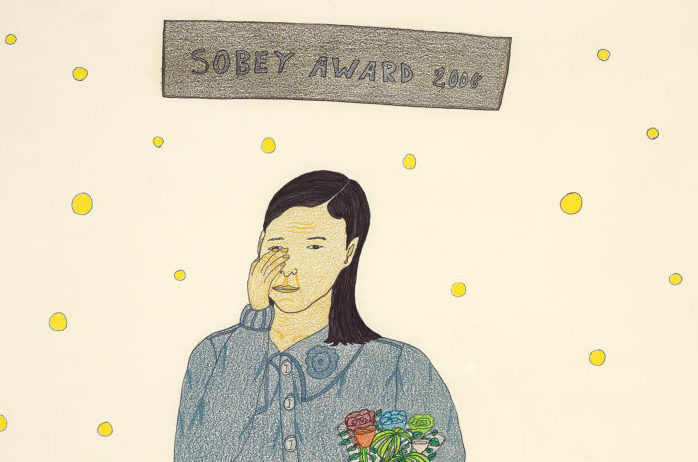
    Featured image: Annie Pootoogook, Sobey Award 2006, 2007. Coloured pencil and ink on paper. 68 x 50.1 cm.

    Annie Pootoogook is arguably one of the most famous Inuk artists in Canada,” I said to the crowd. “She won many prizes and was shown in national galleries, yet still lived in the street economies of Ottawa.” I paused. “Recently, her body was found in the Rideau River.” Following Pootoogook’s death, a forensic officer from the Ottawa Police made derogatory comments about her on a public Facebook post, igniting national outrage about racist Canadian institutions that have a negative impact on the dignity and lives of Inuit. News articles circulated with images of Pootoogook in the streets of Ottawa creating her drawings. These images perpetuated the white saviour mythos that follows Pootoogook’s work—a narrative that settlers project on many urban Inuit, as if to say, Look at all Pootoogook has overcome! She has been street-involved and, despite it all, possesses this beautiful, creative universe within her mind. Of course, the white saviour gaze is dehumanizing and exploitative. It’s not concerned with oh, say, organizing for the livelihood, secure housing or continued well-being of street-involved Inuit in Ottawa, including Pootoogook. The white saviour gaze is only concerned with creating a romanticized vision of Inuit artists, one they may discursively exploit and circulate forevermore, to serve their agenda of psychic conquest. Thus spoke the pseudo-logic that is white liberalism.

    Read More

  • Canadian Art: nîpawistamâsowin / We Will Stand Up

    Canadian Art: nîpawistamâsowin / We Will Stand Up

    Featured image: Tasha Hubbard, nîpawistamâsowin: We Will Stand Up, 2019 (still)

    The images in Hubbard’s film are nothing short of visual sovereignty, to borrow a term from Jolene Rickard. Beautiful shots of the land, Saskatchewan’s famous open sky and horses running on the horizon form the majority of Hubbard’s film. This is truly Creator’s land, claimed for Cree people. Alongside joyful depictions of Native boyhoods, prairie lands become a space for Cree boys to know they are loved, protected and supported. Not since Alanis Obomsawin’s 1993 Kanehsatake: 270 Years of Resistance has a film affected me in such a profound way. Hubbard’s film captures a movement. It showcases the community that is present and active around Colten’s family. The film is a statement from the family, a call to action from the community in Saskatchewan and beyond: nîpawistamâsowin: We Will Stand Up refuses any other framing or inference.

    Read More