Tag: indigenous

  • The Re-Branding of “Indigenous” Art

    The Re-Branding of “Indigenous” Art

    Over the past 5 years, since conflict in industry emerged around the contentious identity claims that have composed “Indigenous” film and art of the past, the industries that have institutionalized and profited off of Native aesthetics have been hard at work with their re-brands.

    One of the first pretendians to fall was a prolifically published trans woman. Funnily, one of the prominent pretendian hunters at the center of that crusade has also had a significant amount of questions from the community she claims, about who she is. I fear this is why she didn’t publicly sign the letter denouncing said figure, only orchestrated it.

    All this, while “Indigenous” art’s ties to zionism for the last decade are being hidden away within “Indigenous” art in favour of a performative, liberal discourse that portrays institutional staff as martyrs for a genocide we have no phenomenology to understand, let alone represent. Some of my current work deals with the development of Indigenous aesthetics in North American art galleries alongside, and in support of, zionist and imperialist interests.

    So, I wonder why queer and trans Indigenous peoples – some of us with strong connections to our communities, and racialized peoples – are so surveilled, harassed, and shamed in “Indigenous” industry when these conflicts come to a head. I’m inspired by the work of creators like Kairyn Potts who have used their social media metrics to analyze systemic bias in Indigenous industry and communities; and think it represents some of the most thought provoking Indigenous digital humanities research inside or outside academia. Similar to Potts’ findings, I’ve written essays that point to transphobia, homophobia, and ciscentrism, alongside white supremacy, as causal of bias against queer and trans Indigenous peoples in industry (and community, but that is not what I am discussing herein).

    I’m now seeing community based narratives borrowed by “Indigenous” institutions to fund their re-brands. Somehow, for me, this practice feels most charged in the prairies, where many significant “Indigenous” arts and culture leaders from the 2000s and 2010s have faced scrutiny about their identity claims, renounced their identity claims, or simply slipped away from the spotlight. Perhaps it feels so charged because the appropriation of kinship aesthetics to bolster unclear identity claims will now forever be associated with this moment and place. Further, the prairies are a place where “Indigenous” art organizations like Ociciwan, or galleries like the Remai Modern and the Winnipeg Art Gallery, are displacing low-income Indigenous peoples and perpetuating the quick gentrification of the neighbourhoods where they reside. Notably, at the Winnipeg Art Gallery, an Indigenous gallery was erected by someone we now know has potentially committed identity fraud, to represent an Indigenous community that is not of those territories.

    I have to wonder if these organizations really know what it means to work through community-based ethics. It’s troubling to see anti-institutional politics and aesthetics be lifted for the benefit of a few institutional players, with no recognition of the harm done over a decade of Indigenous development in art.

    Namely, I’m wondering how “Indigenous” art organizations will repair the hurt caused by the countless pretendian collaborators, artists, mentors, and mentees they have supported for decades. How will they repair the curation of a canon of pretendians? If queer and trans, racialized Native youth have had to heal community complaint publicly, why are these institutions that claim community status not offering healing, too?

    Specifically, I’m looking at an older generation of white-coded folks who gatekept, and gatekeep, this industry. It’s a disappointing, but not surprising, reality within Indigenous communities that lateral violence is sometimes the strongest form of harm we experience within institutions. I’ve been empowered by a younger generation’s discourse to push up against lateral violence in industry and community. That shame is certainly not mine, or any community member’s, responsibility to hold.

    Institutions like Inuit Futures and IIF have not honoured kinship through meaningful healing and connection to those who have been hurt; namely, the students who worked on their projects and in close proximity to Julie Nagam.

    But Indigenous art organizations need to honour kinship and the Treaties too, especially as the primary location, outside of institutions, where pretendianism spread within the arts. I’m looking at organizations like Ociciwan, Rosemary Gallery, the Daphne, Forge Project, BACA – I’m sure there are many others I’m forgetting at this moment – to be transparent with communities. There were missteps. There was hurt, and without any transparency about the healing actions taken. Communities deserve public transparency and spaces for healing before more arts development on their territories and backs.

    What of the pretendians you have kept, and still keep? Perhaps it’s time that we expand settler-colonial “moves to innocence,” to reflect on the ways that race and colonialism manifest through capitalist relationships between “Indigenous” peoples? At some point, we have to clean up our own yards, too. Because black and white thinking and colonial projection just ain’t where my Peoples live. Those who know, know.

    Institutions and organizations need to honour the Treaties through meaningful connections to host communities, not re-branding.
  • On “Pretendians”

    On “Pretendians”

    In late August, two news articles were released alleging Dr. Julie Nagam (University of Winnipeg) had no connection to the Métis identity she had claimed for a decade. Despite this, Dr. Nagam and her research partners, such as the Winnipeg Art Gallery, Inuit Futures (Concordia and University of Victoria) and IIF/Abtec (Concordia), had cashed in on millions of dollars of reconciliation arts and academic grant funding. This is also in the wake of several other high profile “Métis” artists and academics who have been accused over the last 2-3 years of also lacking clear connections to the “Indigenous” identities they claim.

    Canadian academic, arts, and cultural institutions are uncovering a difficult truth: the industries we consider to be “Indigenous” are composed primarily of folks with tenuous claims to Indigenous identity, and lesser so by actual Native peoples. Through my research, I’m learning the “pretendian” phenomena is by design. We are slowly recognizing that a field that disconnects itself from “race” as a central facet of Indigenous identity in Canada, especially in the Canadian prairies, is purposeful, so as to include folks with shifting identity claims under the guise of “sovereignty” (Beyond Blood, Pamela Palmeter, 2011). We are learning from the testimony of students and communities that the “Indigenous” peoples at the highest positions in Art and academia are often the ones tasked with gatekeeping actual Natives, to maintain their power and reputations.

    Yet, these “pretendians” in “Indigenous” industry do not reflect the will of Native communities. We’ve heard endless talking heads on the news speaking in metaphors around their own relationships to these issues. But what do communities actually feel (not think)? In an effort to centre community, as opposed to academic will and individualistic careerism, I want to compose some of the things I have heard from the communities of Native peoples actually grieving ~the pretendians~.

    1. We have all been impacted by pretendians. If you know a Native person who has worked in Art, academia, or another Canadian professional field in the last several decades, you know someone who has been impacted in some way by pretendians. When members of Native communities tell the media that this has been going on for generations, they are not exaggerating. Nothing any non-Indigenous person within the institutions wherein we work could say — or apparently do, otherwise it would have already been done — will change the impact of this reality on our communities, or take away the harm done. No non-Indigenous person has anything to add to this conversation that would be more ethically sound than the voices of Native communities, who have proven they are exceptional at speaking their truths, and do not need institutions or institutional actors to speak for them. Even when it comes to “what to do” about pretendians, I’m not hearing that communities want “punishment,” at least in the way institutions want it. When you don’t believe in a criminal injustice system that has resulted in the shooting deaths of six racialized Indigenous men and boys over the last month, why would you believe that same system would bring healing to your peoples? No one wants calls outs, and conflicts that bring more harm to Native lives. I truly believe any Native person approaching this issue would probably be humble enough to admit they, alone, do not have the answers; especially regarding communities that aren’t their own. Yet, many institutional actors move through this conflict as if they are afraid of getting cancelled within the institutions where they work. Personally, I think that exhibits a psycho-paranoid white-coded way of thinking. Because I think all communities are saying is, tell me who you are, or we have to detach. The consequence is literally just not being colleagues or friends anymore. Why won’t these institutions do that without taking a pound of our flesh first, through unjust processes that represent the interests of the accused. While this might be difficult for non-Native saviors to respect, in the end, what Native communities do about pretendians is not their choice.
    2. It is not Native communities’ “responsibility” to do anything more than grieve. The impact of pretendians cannot be automatically associated with complicity on the part of Native peoples. Pretendians have equally infiltrated themselves into community space (colloquially called getting “ceremony’d in”) and institutional space. The hurt is large, and communities will be determining pathways towards healing for years to come. During this period, Native peoples are not entertainment for white art worlds. What Art sees as “gossip” or “drama” is actually deeply felt by Native peoples, and represents spiritual abuse. These are our f*cking lives, even when we leave work for the day or close Instagram. We deserve the privacy to heal, without the watchful eyes of pretendian Insta accounts like @ / artworldraceshifters, run by white women trolls who just want to touch us.
    3. Institutions, on the other hand, should be experiencing the full weight of their harmful hiring and funding practices, and their impacts on Native sovereignty. Institutions need to make space for healing and consultation with Native nations, not “Indigenous” advocacy organizations like the Indigenous Curatorial Collective, to make this right (until those advocacy organizations have clear mandates that are approved independently, not by consultation companies but by wide consultive processes with Native nations). Funding institutions like the Indigenous Screen Office, SSHRC, and Canada Council for the Arts need to be publicly accountable and transparent with communities through meaningful engagement and healing, if they seek to continue to represent Native nations in their funding programs in a way that is ethical not exploitative.
    4. When does hurt become complicity? I also don’t want to infantilize Native peoples like Canadian institutions have, or posit that Native people don’t have to be accountable for the company they keep (because that’s literally my teachings); especially considering that proximity to Native people is often what affords pretendians their power within Canadian institutions. Over the past four years, I’ve had to grieve a personal and professional relationship with someone who turned out to allegedly be a pretendian. I think talking about this publicly was a huge step towards healing for myself and my communities. I’m freeing myself from them, and everything they extracted from me for years. Let me tell you a similar story. Joseph Boyden had a father who truly believed he was Native. He taught Boyden his whole life that he, too, was Native. It wasn’t until Boyden was an adult that he was confronted with actual Native folks, who began to question who he is, and where he is from, as is common kinship practice. Boyden couldn’t back up his claim to Indigenous identity, outside the fantastical blood myth that had been taught to him by his father. Yet, in the absence of any family history to show he indeed belonged, Boyden refused negations of his identity claims, and pushed forward for decades publishing what many consider to be the foundation of the modern “Indigenous” literary canon. Despite outcry from Indigenous communities, the institutions of Canadian publishing and Art supported Boyden for decades, so much so that he became a kind of monstrous figure. Even if your family has believed it is Native for the last two generations, I think when someone is approached for kinship, it’s an opportunity to keep relating. If you don’t have a “family tree” or recognition from a Native nation to support your claims, and even your closest communities are asking you for kinship and clarity, and yet still push forward leading Indigenous knowledge in Canada, likely to save your career, that’s hurt. No matter how many Natives support you, that’s abuse of proximity to Native communities. While figures like Darryl Leroux took up too much undo space in the 2000s with masculinist scholarship about Indigenous identity claims, he is proof that one can reflect on criticism about an “Indigenous” identity claim, and still heal with Native communities once realizing the claim is not founded. When word spread that Boyden is allegedly a pretendian, Wab Kinew came to his defense, defending him against racialized Native peoples, and arguing Boyden was his “adopted brother.” Similarly, if a Native person ignores community pleas for kinship, and defends pretendians from kinship and healing, likely to suffer their own ego, that’s hurt. That’s rupture. Now that we are widely discussing pretendians as Native peoples in policy, we all need to be community-facing in our responses, otherwise we are just another shield of the institution.
    5. No one needs to get fired. Pretendians and their liberal “Indigenous” supporters are often afraid that meeting healing with accountability is a failure. This is another psycho-paranoid colonial lens that comes from their academic teaching. They’re afraid they’ll get fired or lose prestige. Cree teachings tell us that we always make mistakes in this world. We can always renew our relationships through humility and healing. Why are academic Natives so above their own laws? No one said anyone needs to get fired. These people could also just stop applying for Indigenous funding, and misrepresenting themselves. They could apologize and admit they made a mistake. And we could be publicly transparent about how we will move forward in a way that upholds sacred laws in our work, so as not to reify imperialism in “Indigenous” art and research.
  • Red Disability, Queer Death, and Native Love “at the End”

    Red Disability, Queer Death, and Native Love “at the End”

    Your art will live on. A call across time and space. Honour the sacredness of how we remind one another that we existed across time.

    — Maria Buffalo, as read by Jessie Loyer in nanekawâsis (2024)

    There are empty spaces that must be respected—those often long periods when a person can’t see the pictures or find the words and needs to be left alone.

    — Tove Jansson, Fair Play (1989)

    indian is an idea / some people have / of themselves
    dyke is an idea some women / have of themselves

    — Some Like Indians Endure, Paula Gunn Allen (1988)

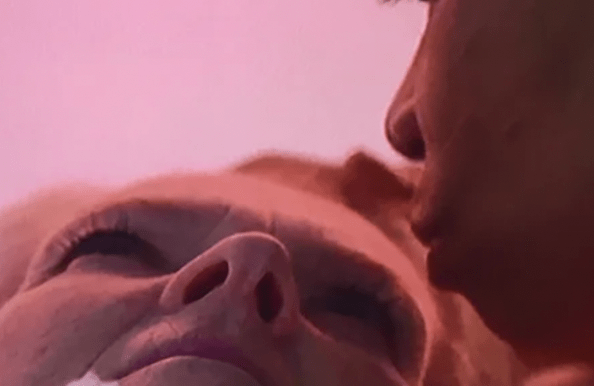
    Métis filmmaker Conor McNally has been meticulously working on his documentary feature debut nanekawâsis—about the life and work of Cree painter George Littlechild—for years. Despite being a widely respected Plains Cree artist for decades, I was surprised to learn that Littlechild’s work has not been collected by the National Gallery of Canada, and that he doesn’t have a Wikipedia page. At this pivotal moment in Littlechild’s long and storied career, McNally’s film plays a crucial role in commemorating Littlechild’s legacy. With its focus on the relationships that shape Littlechild’s work—such as his longtime love for his partner—nanekawâsis tells a story of enduring queer love in an Indigenous apocalypse. 

    Queer love in the apocalypse has become a literary and visual trope in recent years. Amid apocalyptic realities—such as widespread disease and environmental crises—conservative social policies targeting 2LGBTQ+ people have started to permeate everyday discourse. Representations of queer love “at the end” have emerged in response.

    At first glance, these representations might seem like expressions of endurance: We’re here, we’re queer, in any mode or reality known on Earth, and to queered peoples. Yet, fetishistic themes of disability and death mar these narratives, hindering any possibility of queer futurity (however ironic such a proposal may be). Amidst a sea of narratives exploring queer deviance and death, nanekawâsis stands out as a realized future, and a remarkable and unexpected memorialization of minor histories and quiet archives.

    Read full column here.

  • Inferno of Bodies

    Inferno of Bodies

    Thank you for joining me for this edition of I Saw Some Art. Let’s address a critical issue upfront: Palestine will be free. Social media platforms were recently inundated with images depicting demonstrations in major Canadian cities advocating for Palestine and demanding an immediate cessation of the siege, occupation, and ongoing atrocities in the Gaza Strip and West Bank. Indigenous communities from “the river to the sea” have united in a collective movement to denounce the unfolding genocide in Palestine, driven by imperialist rhetoric.

    The narratives surrounding Indigenous peoples—from Palestine to Turtle Island—reflect the prevailing sentiments within settler-colonial societies. It is striking to witness the juxtaposition of watching Killers of the Flower Moon—nominated for several Academy Awards, yet having won none—while witnessing the ongoing genocide of Indigenous peoples in real-time.

    Killers of the Flower Moon brought to mind my readings of Dante’s Inferno during my formative years as an undergrad. Dante Alighieri, an Italian poet and philosopher, is celebrated for being the first poet to incorporate common speech into his literary works. Before Dante, poetry was exclusively written in Latin, accessible only to the upper class and nobility. Dante’s works, however, resonated with the people of Italy and played a pivotal role in establishing a common language across Western Europe. Embedded within his writings is the early framework of social hierarchy, juxtaposed with patriarchy—wherein man, ordained by God, is placed above woman, child, and even community. By making literature accessible to the common “man,” Dante imbued men with a sense of godlike moral and logical reasoning, or so the Enlightenment dogmas say.

    When I first encountered Dante’s Inferno, its depiction of the circles of hell struck me as a reflection of our earthly existence under settler-colonial regimes. Dante’s adherence to Christian symbolism instills the verses of Inferno, or Hell, with a profound resonance, resembling thinly veiled metaphors for the moral consequences of human embodiments on Earth.

    For Dante, Hell is a landscape heavily influenced by Christian and colonizing dogmas, and serves as an allegory of the moral consequences of the flesh. To me, an NDN in 2024, Hell is the reign of Western colonialism and its doctrines, a dominance that not only demands scrutiny but also calls for its dismantling and the envisioning of alternatives. Hell is man, ordained with the power of God, serving as a tool for the conquest of those deemed lesser forms of life on Earth, where the circles of Hell are tightly bound. Hell is other people.

    In contemporary discourse, if we examine the representation of Indigenous life, such as that depicted in Killers of the Flower Moon, it becomes evident that colonial narratives have persisted since the 14th Century. This enduring narrative suggests a troubling continuity, wherein Indigenous peoples are subjected to felt settlements akin to the infernal torments envisioned by Dante.

    Read full column here.

  • I Saw Some Art

    I Saw Some Art

     don’t give a fuck what you think about me / And I don’t give a fuck ’bout the things that you do / And I don’t give a fuck what you think about me, what you think about me / So yeah, fuck you.

    — Charli XCX, “What You Think About Me”

    We are not the same.

    — Old Internet Proverb

    Dear art,

    It’s been a long time. I have to admit that I miss writing to you. You never made it an easy business though, reviewing the places where one finds beauty and the messy politics that get stirred up in the cyclical endeavor of making and responding to art. So much has transpired since we last spoke. A titan in publishing and Canadian art fell. COVID-19 measures closed the doors of galleries for a period of time. A recession looms (never a good thing in the arts). Still, here I remain, searching for truth. Too bad there’s no truth in art (it’s not like it’s Art).

    As you may have garnered, dear reader, there are a few different characters in the mix. There is Canadian “art,” the industry wherein I work and have worked for a decade now. Canadian art is a network of galleries, critics, publishers, academics, artists, benefactors, collectors, and not-for-profit organizations. Of course, there’s also Art. What is Art? Entire classes are taught to answer this question. Art is pre-discursive and, to live artfully, is as innate to life as breathing and eating, if you ask me (that said, I’ve always been a romantic). Then, there is “Indigenous Art” and Indigenous art, a distinction I discuss herein.

    Here I stand, facing you once more, cloaked readers and art lovers, and I’m at a loss of where to begin. I did, indeed, see some art since we last parted ways. I wish I could simply write about that art now. What’s it like to be in some faraway city with ancient architecture sinking deeper into the sea with every step you take on its land, with your parents footing the bill? What is it like to have the decadent time to search only for beauty and have no sense of what it means to live to survive? It’s not all dreary. Truth and love brought me here, too. At my core, I’m just another scene kid who gets my dopamine hits from looking at things. I don’t know where to begin because how can I simply talk about “Indigenous Art,” and Indigenous art, without acknowledging that the meaning of these terms are in flux? How can I talk about “Indigenous Art” without talking about the grief so many Native folks are contending with right now?

    Read full column here.