Category: Archive

  • Curatorial: For Whom Masculinities Matter

    Curatorial: For Whom Masculinities Matter

    Featuring Lacie Burning and Léuli Eshraghi with asinnajaq and Dayna Danger. Curated by Adrienne Huard and Lindsay Nixon for gijiit.

    Never Apart, 7049 St Urbain St, Montreal, QC, H2S 3H4.

    Opening: Thursday, July 11, 2019, 6 – 10 pm.

    Recent books in the field of Native Studies have expressed concern about cultures of toxic masculinism naturalized among Indigenous men, arguing certain forms of masculinity can be colonial institutions that Indigenous men must be freed from. But Indigenous masculinity projects also risk perpetuating performative narratives about cisgender, straight men reclaiming positive forms of warrior culture, at times erasing the labour Indigenous women and queer and trans Indigenous peoples have undertaken for centuries supporting Indigenous men, and regardless of the ethicacy of those men’s relationships to the women and femmes in their lives. Further, the primarily cis- and hetero-normative frame of Indigenous masculinity studies, theory, and art can make an uneasy footing for gender-fluid, and even traditional forms, of masculinities. And still, the criminalization of Indigenous men and boys persists. “For Whom Masculinities Matter” asks, what has gone unsaid about Indigenous masculinities? What can Indigenous knowledge about intentional tenderness and fluid gender teach us about consciousness-raised, anti-colonial masculinities?

    gijiit is a curatorial collective based in Montreal and Toronto, concentrated on community-engaged Indigenous art addressing gender, sex, and sexualities.

    PROGRAM: Join the participating artists and curators for a SPA DAY WITH THE BOIS on Saturday, July 13, 2019 from 12 pm to 2 pm. Light brunch will be provided for a moderated discussion circle about traditional, non-Western genders as a way of ~decolonizing~ toxic masculinities. Following brunch, we will take a dip in the pool.

  • Canadian Art: Stories Not Told

    Canadian Art: Stories Not Told

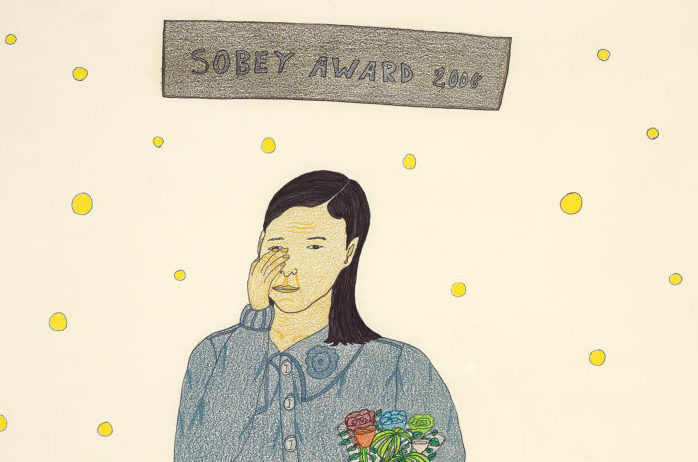
    Featured image: Annie Pootoogook, Sobey Award 2006, 2007. Coloured pencil and ink on paper. 68 x 50.1 cm.

    Annie Pootoogook is arguably one of the most famous Inuk artists in Canada,” I said to the crowd. “She won many prizes and was shown in national galleries, yet still lived in the street economies of Ottawa.” I paused. “Recently, her body was found in the Rideau River.” Following Pootoogook’s death, a forensic officer from the Ottawa Police made derogatory comments about her on a public Facebook post, igniting national outrage about racist Canadian institutions that have a negative impact on the dignity and lives of Inuit. News articles circulated with images of Pootoogook in the streets of Ottawa creating her drawings. These images perpetuated the white saviour mythos that follows Pootoogook’s work—a narrative that settlers project on many urban Inuit, as if to say, Look at all Pootoogook has overcome! She has been street-involved and, despite it all, possesses this beautiful, creative universe within her mind. Of course, the white saviour gaze is dehumanizing and exploitative. It’s not concerned with oh, say, organizing for the livelihood, secure housing or continued well-being of street-involved Inuit in Ottawa, including Pootoogook. The white saviour gaze is only concerned with creating a romanticized vision of Inuit artists, one they may discursively exploit and circulate forevermore, to serve their agenda of psychic conquest. Thus spoke the pseudo-logic that is white liberalism.

    Read More

  • Canadian Art: nîpawistamâsowin / We Will Stand Up

    Canadian Art: nîpawistamâsowin / We Will Stand Up

    Featured image: Tasha Hubbard, nîpawistamâsowin: We Will Stand Up, 2019 (still)

    The images in Hubbard’s film are nothing short of visual sovereignty, to borrow a term from Jolene Rickard. Beautiful shots of the land, Saskatchewan’s famous open sky and horses running on the horizon form the majority of Hubbard’s film. This is truly Creator’s land, claimed for Cree people. Alongside joyful depictions of Native boyhoods, prairie lands become a space for Cree boys to know they are loved, protected and supported. Not since Alanis Obomsawin’s 1993 Kanehsatake: 270 Years of Resistance has a film affected me in such a profound way. Hubbard’s film captures a movement. It showcases the community that is present and active around Colten’s family. The film is a statement from the family, a call to action from the community in Saskatchewan and beyond: nîpawistamâsowin: We Will Stand Up refuses any other framing or inference.

    Read More

  • just fem things Podcast: Ep 1

    just fem things Podcast: Ep 1

    Molly Swain’s Podcast

    The inaugural episode of just fem things features Molly Swain in discussion of her beloved iPod. Jas and Molly talk about youth communities in the aftermath of the 2012 student movement in Montreal, the power of song, revolution, nostalgic futures, adaptive cultures, and friendship. Listen here.

    ♥ A podcast about the things that feminists love ♥

    “How do we understand our relational ecologies in a way that encompasses tech?”— Molly Swain, Episode 1

    “We live in the future.”— Jessie Loyer, Episode 2

    just fem things was a periodic, independent and small release podcast produced, written, researched, and hosted by Jas M. Morgan. Morgan draws from their background in Art History, Gender Studies, and Indigenous Studies to seek a feminist methodology of things. A digital archive of feminist things itself, with just fem things, Morgan and their collaborators ask, what makes a thing feminist? How can relating to things be a decolonizing act?  What does it mean to love things, to be kin to things, and to make kin through things?

  • 2s2x: Living Archives

    2s2x: Living Archives

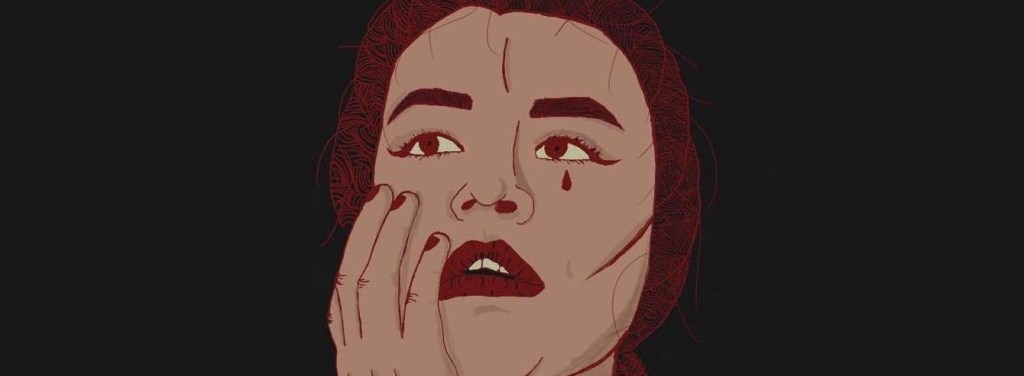
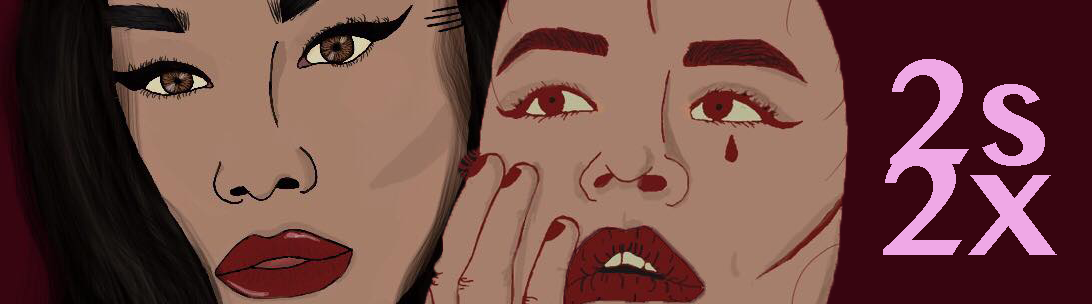
    Images by Arielle Twist

    Curated by Lindsay Nixon and Adrienne Huard for gijiit. gijiit is a curatorial collective based in Tio’tia:ke and Tkaronto, concentrated on community-engaged Indigenous art dealing with themes of gender, sex, and sexuality.

    Facebook event: https://www.facebook.com/events/720243518373526/.

    It was apparently Derrida (but a Black woman probably said it better first) who described archive fever as the môniyâw-iyinak obsessive compulsive death drive, found “in” this ethos so lovingly called The Archive (“in” being the operative term). Derrida was concerned with the Latin origins of the word archive—archivum or archium—derived from the Greek arkheion meaning a house, a domicile, an address, or the residence of the superior magistrates. The archons were those given powers and command over the archivum or archium. The archive is the movement of bodies, objects, and ideas from the public into private, authoritative ownership. Archive fever is the deadening of, the never-ceasing death drive inflicted upon, all that, those, contained within its hallowed walls. What would it mean to take our bodies, our ways of loving, fucking, and being, out of the archive; to set ourselves aflame with an orgasmic fever, instead? To spark new life. To release Indigenous desire from its confines. Acknowledgments: conceptual credit goes to Léuli Eshraghi who helped work through some of the themes for this program. kinanâskomitin kîtisân.

    ARTICULE EXHIBIT: Creative Kinship and Other Survivalist Tendencies

    Featuring new artworks from Jonas Arahkwente Gilbert, Dayna Danger, Stacy Lee, Moe Clark, and Beric Manywounds

    May 11 – June 9, 2019 * Opening: May 10, 2019 – 5 PM * Articule (262 Avenue Fairmount O)

    For its first mentorship project, gijiit brings together pockets and constellations of creative kinships in Tio’tia:ke/Mooniyaang (Montreal). Whether it’s sneaking one another into studio spaces to share access to resources, making one another food, or spending hours at the hot springs to heal thine own holy temple(s) of creative labor, NDN and Black kin have been helping one another survive creative industries for a minute.

    NDN and Black folx know all about this so-called non-apocalypse trending on the lips of the hipster arts anthropocene folx, who keep telling us it’s sooooo problematic when I call it an apocalypse (probably because they’ve never experienced one). Colonialism is such a gaslight. Listen: NDN and Black peoples have seen the end of their known ways and the implementation of a sick, extractive alien order that destroyed our intimacy with all Creation. Possibility narratives have been increasingly taken up in academic, lit, and art spaces, but NDN and Black peoples, creators, are the O.G. post-apocalyptic warriors, developing survivalist tendencies of care since the first môniyâw-iyin tried to snuff out our medicines.

    Creative kinship encapsulates the intimacy, solidarity, and mutual survivance creators find through various forms of collaboration. Groups of artists with connections to Tio’tia:ke/Mooniyaang and Kahnawake will participate in a month-long collaborative residency period at articule. The residency period will then culminate in a final exhibition of the work completed. In recognition of lateral and non-hierarchical practices of mentorship, there is no power differentiation between the artists in collaboration—no western art administrative model that puts the administration and the faculty above, and in control of, the artists producing for said institution.

    SBC / ARTEXTE PERFORMANCE: Cumming Commons

    May 11, 2019 – 2 PM * SBC Gallery (372 Saint-Catherine, 507)

    Featuring Arielle Twist, Léuli Eshraghi, and Kite.

    By putting our freaky kin and ancestors in the closet (perhaps more aptly described as the archive drawer), the môniyâw-iyinak were willing us to die. We aren’t interested in The Archive, an ethos within which our dykey, fairy bodies have always been unintelligible. We are interested in the idea of many archives. What would, could, an anti-archons archive, a living archive, an Indigenous (orgasmic) archive, be? To this end, we know that queer and/or trans folks and erotics have always existed here. How can we pervert The Archive to find what Anne Stoler has termed minor histories: in search of beautiful, Indigenous life, reading between the lines, seeing beyond the veneer, of those cultural objects about us, so dear to those who will us to die? Drawing from the Artexte archive and Indigenous art criticism from the 1980s onward, we will pose an intergenerational conversation by animating the texts in conversation. With our olders, Elders, mentors, ancestors, and all those who paved the way for us ever in our hearts and minds, we will locate the “queer,” “trans,” and “sexy” in the Indigenous art archive.

    ARTICULE PROGRAMMING: Bead and Bitch with Nico Williams, Dayna Danger, and guests. May 12 – 1 PM * Articule (262 Avenue Fairmount O).

    Join Nico Williams, Dayna Danger, and guests for an afternoon of beading, tea, snacks, and auntie gossip. Everyone is welcome, from beginners to kookums. Beading supplies will be provided by gijiit.

    FUNDRAISER: Ziegfeld Nü Metal Frolic

    May 10, 2019

    Featuring performances from Adrienne Huard, Dayna Danger, Arielle Twist, and surprise guests. DJ set by Frankie Teardrop.

    A night of sexy, Indigenous Nü Metal performances and dancing to queer-pray in the memory of Princess White Deer and all the Indigifemmes who exercise(d) their sovereignty on the pole, the strip, or Instagram. A “ziegfeld frolic,” to honour the burlesque style Princess White Deer would perform on Broadway.

    This is an invite only fundraiser. In the week prior to the event, a select number of tickets will be available for purchase. Keep and eye on the Facebook event for details.


  • The Walrus: #MeToo and the Secrets Indigenous Women Keep

    The Walrus: #MeToo and the Secrets Indigenous Women Keep

    Featured Image: Courtesy of The Walrus

    I’ve held secrets for Indigenous men for years, fearful of the repercussions that might result if I told those truths. I held the secret of Joseph Boyden’s questionable Indigenous identity for years. I didn’t publicly criticize the problematic nature of Wab Kinew’s homophobic and misogynistic lyrics either. I have held the secrets of artists, filmmakers, musicians, and actors who use their studio or residency spaces as revolving doors for young, creative women and then go home to their Indigenous girlfriends or wives. I have kept quiet about the toxic bro culture in the Indigenous music scene, wherein touring artists, often with wives or girlfriends at home, pick up young “groupies” as they move from town to town.

    Read More

  • Curatorial: Truth and Punishment, Kama La Mackerel

    Curatorial: Truth and Punishment, Kama La Mackerel

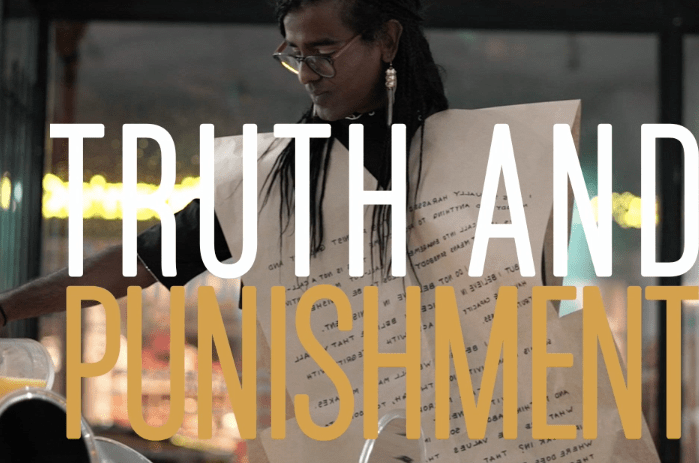
    Feature Image: Still From Kama La Mackerel’s Truth and Punishment

    “There’s no P in TSD.” — Kama La Mackerel

    Click here for a promotional video for the performance “Truth and Punishment” by Kama La Mackerel (full version not publicly available). After La Mackerel performed at the opening for The Ethical Etherealness of Fuck and Love at La Centrale Galerie Powerhouse, she removed the dress she had been wearing and posed it on a mannequin already in the gallery. The dress, which had written on it La Mackerel’s account of being sexually assaulted at the gallery, remained in the gallery for the duration of the show. On the day of the opening, a collective of anonymous Black feminist artists in Montreal released a letter entitled “Dear White Feminists,” confronting the gallery’s history of institutional racism.

  • Curatorial: The Ethical Etherealness of Fuck and Love

    Curatorial: The Ethical Etherealness of Fuck and Love

    Featured Image: Still From Sarah Biscarra Dilley’s tʸiptukɨłhɨwatʸiptutʸɨʔnɨ

    September 21 – October 19, 2018
    La Centrale Galerie Powerhouse, 4296 St Laurent Blvd, Montreal
    Curated by Lindsay Nixon
    Featuring Sarah Biscarra Dilley, Arielle Twist, Dayna Danger, and Amber Williams-King.

    Photographs from the opening can be viewed here.


    “Why don’t you ever use your strength on me?” she said.
    “Because love means renouncing strength,” said Franz softly.

    ―Milan Kundera, The Unbearable Lightness of Being

    Sry not sry: Kundera was a fucking asshole. If someone asks to be slapped across the face repeatedly so they can spray cum all over your bedroom floor, the back alley you’re making dirty in, or wherever, you better beat the hell out of that beautiful sub bb—if you consent, that is; or if you don’t consent, but like it that way.

    Kundera was just another yt boi who drew from centuries old knowledges about eternal return, contained within the stories of Jainism, Hinduism, Sikhism, Turtle Island Indigenous teachings, and Buddhism, just so he could colonize its ethical love logix with his own brand of jerk-off existentialism. I know you didn’t think a yt boi made that shit up[i]?

    But we only live once, he whined, time is linear, duh. Sry Kuny, ya basic. With our Mother, we live forever. Leave it to a fuck boi to say that if we, as humans, don’t know outcomes, we can’t ever know if our decisions are right or wrong. We can still ground our actions in good-intent and love, like the teachings from the aunties say. A fuck boi says lightness, where I argue that the draw to empathy is not unbearable, but in itself, sweet. Knowing, accepting, the heaviness of continuity, forever, is, indeed, a loving fate.

    Some have asked if ethical love is just a quandary borrowed from the existentialists, walking around some French-Canadian city with a Camus tattoo and worn down copy of The Unbearable Lightness of Being in their back pocket—a modern day, fuck boi Franz. Don’t get it twisted, the simultaneously ancient and present, ethereal body of colour is a vessel for the O.G. ethical loving and fucking that have always existed in occupied territories.

    “The Ethical Etherealness of Fuck and Love” takes back the ethics of intimacy and relationality from those yt bois too light to hold down—Kunedra, Nietzche, Bourriaud. Yes, global colonialism has disrupted our traditional life ways—our ways of loving and being loved. We are sick with an extractive white-supremacist project that has resulted in a loss of our connection to the land and, along with it, our connectivity with all life around us and our understandings of how that connection is fostered through love. But that’s precisely why love is a politic, one which we activate through engagement with ancient technologies—our material cultures. Our sacred kinships and relationalities are encoded within us, hard wired into our bodies. From them, we create something that is both futuristic and of the old ways, embodied through us. We are the children of the diaspora, loving, fucking, and healing ourselves into the future.

    Just as human time has never been linear, human love, human fuck, has never been contained in the physical from of humanity. We are phantoms, ethereal, haunting colonized territories with a love that just won’t quit. Because we know love is heavy, oh so heavy. We fuck until the sun comes up. We’ll cum until the world ends and we all plunge into the dark, comfortable hole[ii]. We love our bodies back to life. Because tonight, we are infinite. Thus spoke karma sutra[iii].

    [i] A reference to the 2000 film Bring It On.

    [ii] A reference to Koko, the sign language speaking gorilla, as told to her caretaker Francine Patterson.

    [iii] A play on Nietzche’s Thus Spoke Zarathustra.

  • Curatorial: Loner Culture

    Curatorial: Loner Culture

    Featured Image: Still From Thirza Cuthand’s Colonization: The Second Coming.

    September 12 – October 27, 2018
    InterAccess, 950 Dupont Street, Toronto
    Curated by Lindsay Nixon

    “Maybe they’re in their bedrooms figuring out how to work a dental dam.”

    — Thirza Cuthand, Lessons in Baby Dyke Theory

    Thirza Cuthand’s early videos were before their time, driven by her self-branded persona, unabashed attention-seeking performative dialogues, and overexposure before post-reality states were in effect. Cuthand made camcorder videos about the isolation of living in Saskatoon as an NDN lesbian in the late 1990s. The accessibility and affordability of video allowed her to create in her bedroom, cut-off but reaching out for queer connection.

    In the DIY style of the time, feminist activist Kathleen Hanna wrote, performed, and produced her 1997 record Julie Ruin on a Drumatix she bought at a pawn shop for $40, in order to “escape what had happened to her.” Hanna describes cutting and pasting samples for Julie Ruin in the 2013 documentary The Punk Singer, by herself, in her room, facilitating relationships with the materials she used unmediated by anyone else. “It sounds like you can hear a human being’s fingers all over it. It sounds like bedroom culture. It sounds like something a girl made in her bedroom.”

    Cuthand’s early videos suggest a similar relationship to materials—videos shot on a camcorder and carefully labored over by a “baby dyke” in her bedroom, who didn’t just then throw her work away, but chose to share it with the world. This exhibition asks, how can we connect all the bedrooms wherein NDN weirdos are creating work that is never shared? In curating this exhibition it became important to identify a gender-neutral term for girlhood, to make space for all the ways NDN loner culture is embodied by girls and gender weirdos alike. As Kite said to me in conceptualizing a gender-neutral term for girlhood, that’s “loner culture.” In “Loner Culture,” Cuthand, Fallon Simard, and Kite fill a shared bedroom with big feels and their loner creations.

    More information can be found here.


    Full “Loner Culture” Exhibition Text

    After watching the 2013 documentary The Punk Singer, I was obsessed with what Kathleen Hanna described as “bedroom culture.” In the DIY style of the time, feminist activist Hanna wrote, performed, and produced her 1997 record Julie Ruin on a Drumatix she bought at a pawn shop for $40, in order to “escape what had happened to her.” Hanna describes cutting and pasting samples for Julie Ruin, by herself, in her room, facilitating relationships with the materials she used unmediated by anyone else. “It sounds like you can hear a human being’s fingers all over it. It sounds like bedroom culture. It sounds like something a girl made in her bedroom.”

    In curating Loner Culture, it became important to identify a gender-neutral term for girlhood, to make space for all the ways NDN loner culture is embodied by girls and gender weirdos alike. The origin of the term NDN is elusive. It’s been kicking around in kookum’s favorite pop culture such as Keith Secola’s NDN Kars—so, for a minute. But NDN reached a state of terminal velocity on the internet, where it has become a frequent shorthand for Indigenous on platforms like Twitter, Tumblr, and Instagram. In my search for a genderneutral way to describe the things that NDN youth created in their bedrooms, and how those creations were influenced by the onset of the internet, artist Kite said to me, that’s loner culture.

    Thirza Cuthand’s early videos suggest a similar relationship to materials—videos shot on a camcorder and carefully labored over by a “baby dyke” in her bedroom, who didn’t just then throw her work away, but chose to share it with the world. Cuthand’s early videos were before their time, driven by her self-branded persona, unabashed attention-seeking performative dialogues, and overexposure before post-reality states and digital worlds were fully in effect. The accessibility and affordability of video allowed Cuthand to create in her bedroom, cut-off but reaching out for queer connection, imaging alternative futures from within spatialities where lesbian Indigenous futures were not ensured—stifled, even.

    Cuthand’s early monologues feel similar to a perzine—a zine about the personal experiences of its author—dealing with topics ranging from the isolation of living in Saskatoon as an NDN lesbian in the late 1990s, to the perils of being a young lesbian dating in a community of women older than you. Cuthand has never been afraid to break the barriers of identity politics with her radical intersectionality, addressing topics of power differentiation and intimate partner violence at a time when single issue politics reigned in lesbian and Indigenous art alike.

    Almost twenty years later, Kite now considers the confluence of youth culture and indigeneity with her installation Better off Alone (2018). Kite represents the uneasy truth that, for some Indigenous youth, the first representations they saw of Indigenous women, of Indigenous peoples, in popular culture were in Disney’s Pocahontas. Disney’s Pocahontas is a complex figure for Indigenous youth. You have to give it to P: she’s pretty badass, always going against her father, famously wondering, what’s waiting just around the riverbend. Her best friend is a racoon, she has dream visions, and she gets down with her kookum. Disney’s Pocahontas was an early model of Indigenous feminisms for all the NDN kids out there, before age and experienced oppression complicated her representation, because it was Pocahontas’s relationship building, not the warriors, who would end the war between the settlers and her people.

    But Pocahontas was also a frequent commodification of the late 1990s. Her image sold pencils, cups, and even girl’s dresses cut and sewn to look like Indigenous clothing made of hide. Because Pocahontas was an idea, and a sexualized one to boot, she was an object upon which John Smith could project his ~nice guy~ ego, his adventure-seeking, kinder gentler brand of colonialism that set him apart from men like Governor Ratcliffe. Smith first laid eyes on Pocahontas when she was running around the forest in a skimpy hide dress that hugged her hourglass shape. He drew a gun on her but was ultimately softened by her full lips, and her hair as it caressed her face, blowing wildly and sensually in the wind. Somehow, despite the gun, despite the undertone of sexual violence that marrs their entire meeting, we, the audience, are supposed to believe both are swooned. Pocahontas’s savagery, as the would-be colonists put it, is how those dangerous white men, as Powhatan put, saw her. The same fascination with the savagery of Indigenous peoples leads to another kind of nostalgic child’s play centred around voyeuristic representations of Indigenous peoples such as culture camps for kids that appropriate language and visualities from indigenous communities.

    But with Better off Alone, Kite juxtaposes Pocahontas’s image with underground rave culture, exhibiting kandi—brightly colored jewelry made of plastic—from her own loner youth, and even one that spells out “pokahontas”in lettered beads. Who is pokahontas, the club kid persona and raver? We know she teaches John Smith about the colours of the wind, getting him all high and shit, talking to rocks and trees, flying through the air with holographic deer while her body feels like paint strokes that fade in and out of the wind’s current. What a trip—and pokahontas is the trip guide. Her visions expose that humans are all connected to one another in a circle, a hoop, that never ends—that otter are kin. She blows minds.

    Like raver culture, and youth scenes generally, the internet was, and is, used as a means of digital connection. At the onset of the internet, early message boards and chat rooms created digital networks for NDN youth such as Kite and kandi kid pokahontas. In the place of voyeuristic fascination with Indigenous savagery that can motivate settler child’s play, Kite finds joy in the creation of computer programs that make computer’s bark, for instance. Kite has reclaimed NDN play for those whom it rightfully belongs to, her own brand of NDN child’s play re-appropriated.

    Kite and Cuthand’s work in Loner Culture expose the hurt associated with NDN youth, but also a culture of light heartedness in working through hard truths. Partying. Fetish pup play. But Fallon Simard’s trans guy memes are perhaps the apex of NDN’s dealing with pain through the use of a signature senses of humour. With his Trans Guy Memes, Simard transforms common hurtful moments of transphobia he has experienced into moments of laughter between those affected. From misgendering to the affect of anger when cisgender men use single stall bathrooms to actually take a long dump, pointing to all the situations trans folks have to deal with to simply navigate a bathroom safely, Simard uses popular contemporary memes to speak back to instances of transphobia and transphobic violence.

    In another set of memes, Simard overlays images of their chest post-surgery with layers of pink and unfocused images, until the scars are indecipherable as anything other than a beautifully made composition. Simard engages memes as both coping and healing mechanism, arguing it’s OK to vent about systems of power that cause daily harms, in a culture where so-called millennials are often shamed for doing just that. Further, in a meme-ified culture that can tend towards glorifying coping mechanisms that might cause different kinds of harm on the trans guy body—self-harm, isolation, and taking poor care of one’s self—Simard shows there is no shame in healing one’s hurt (or in using so-called unhealthy coping mechanisms, for that matter). Every trans guy is just doing what he can to survive.

    In Loner Culture, Thirza Cuthand, Fallon Simard, and Kite fill a shared bedroom with big feels and their loner creations. Loner Culture attempts to connect all the bedrooms wherein NDN weirdos are creating work that is never shared, bringing together these separate times and moments which all mirror each other. With the early onset of the internet, what were the digital networks that did connect NDN loner bedrooms?

    Loner Culture is the audacity of a future imagined and of a community created when one is told they don’t have either. Loner Culture is that wished-for future realized, and a beacon of home for all the NDN youths in the struggle. We see you. We love you. Slay all day.

  • Exhibition Text: deep time construction @ Wattis Institute

    Exhibition Text: deep time construction @ Wattis Institute

    Featured Image: Still From Sky Hopinka’s Dislocation Blues

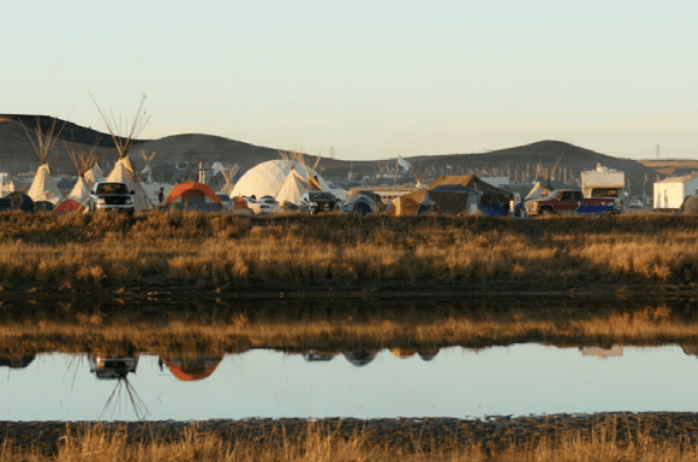
    Indigenous filmmaker Hopinka’s Standing Rock is a movement, a love, loss, witnessed as come and gone by its participants. Standing Rock is a family disbanded. It’s anti-relationality festering beneath the surface just a little too long until it turns into hurt. A desperate and anxious need to reconstruct the events at Standing Rock in visuals and stories, hoping to find truth amongst multiple realities. It’s a begrudging return to every day because how could one ever return to the monotony of school, work, and other trivial matters having been part of a collective one.

    Read More