Category: Archive

  • GUTS: Visual Cultures of Indigenous Futurisms

    GUTS: Visual Cultures of Indigenous Futurisms

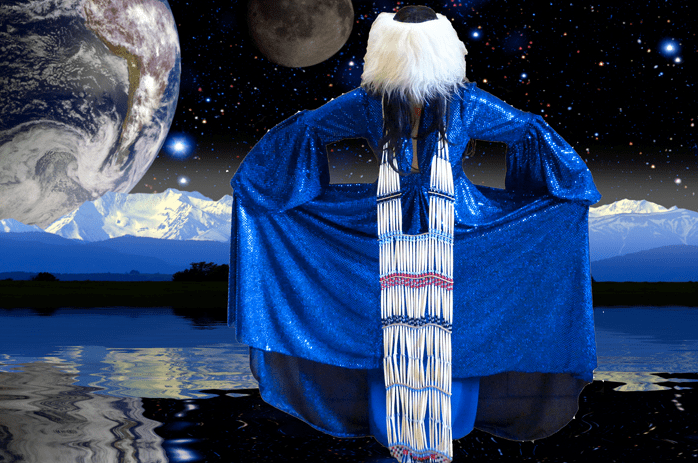
    Featured Image: Hoop in the Cloud, Wendy Redstar

    Armed with spirit and the teachings of our ancestors, all our relations behind us, we are living the Indigenous future. We are the descendants of a future imaginary that has already passed; the outcome of the intentions, resistance, and survivance of our ancestors. Simultaneously in the future and the past, we are living in the “dystopian now,” as Molly Swain of the podcast Métis in Space has named it. Indigenous peoples are using our own technological traditions—our worldviews, our languages, our stories, and our kinship—as guiding principles in imagining possible futures for ourselves and our communities. As Erica Lee has described, “In knowing the histories of our relations and of this land, we find the knowledge to recreate all that our worlds would’ve been if not for the interruption of colonization….


    Read More

  • Black Indigneous Harm Reduction Alliance: Decolonization 101

    Black Indigneous Harm Reduction Alliance: Decolonization 101

    Featured Image: Smudge, Hallie Rose Taylor

    The Indigneous women and Two-Spirit Harm Reduction Alliance is proud to finally launch it’s first zine, Decolonization 101! In 2014 IW2SHRC received financial support from the McGill Rez Project, under the direction of Emily Yee Clare, to create a decolonizing resource which would be easily accessible and understandable. IW2SHRC’s Decolonization 101 is the result of that collaboration. A special thanks to Otto Vicé and Jaime Maclean for formatting the zine….

    Read More

  • The Feminist Wire: Eco-Feminist Appropriations of Indigenous Feminisms and Environmental Violence

    The Feminist Wire: Eco-Feminist Appropriations of Indigenous Feminisms and Environmental Violence

    Featured Image: Our Bodies Are Not Terra Nullius, Erin Konsmo

    The connection between land and life has been told through many teachings through a multiplicity of Indigenous communities. Nookomis Winona LaDuke (1999) reminds us that we have relations outside our human kin and in the environment around us. Indigenous peoples honor these relations in ceremony, song, and in reciprocity with their environments. This is even embodied in our languages. Nehiyaw language and worldview is divided between animate and inanimate. Nehiyaw language is also heavily relational and every work contains meaning about how we relate to other forms in our environment. Certain objects which are not imbued with spirit in the Western worldview are considered animate, or having a consciousness, depending on their relationships with other forms they encounter…

    Read More